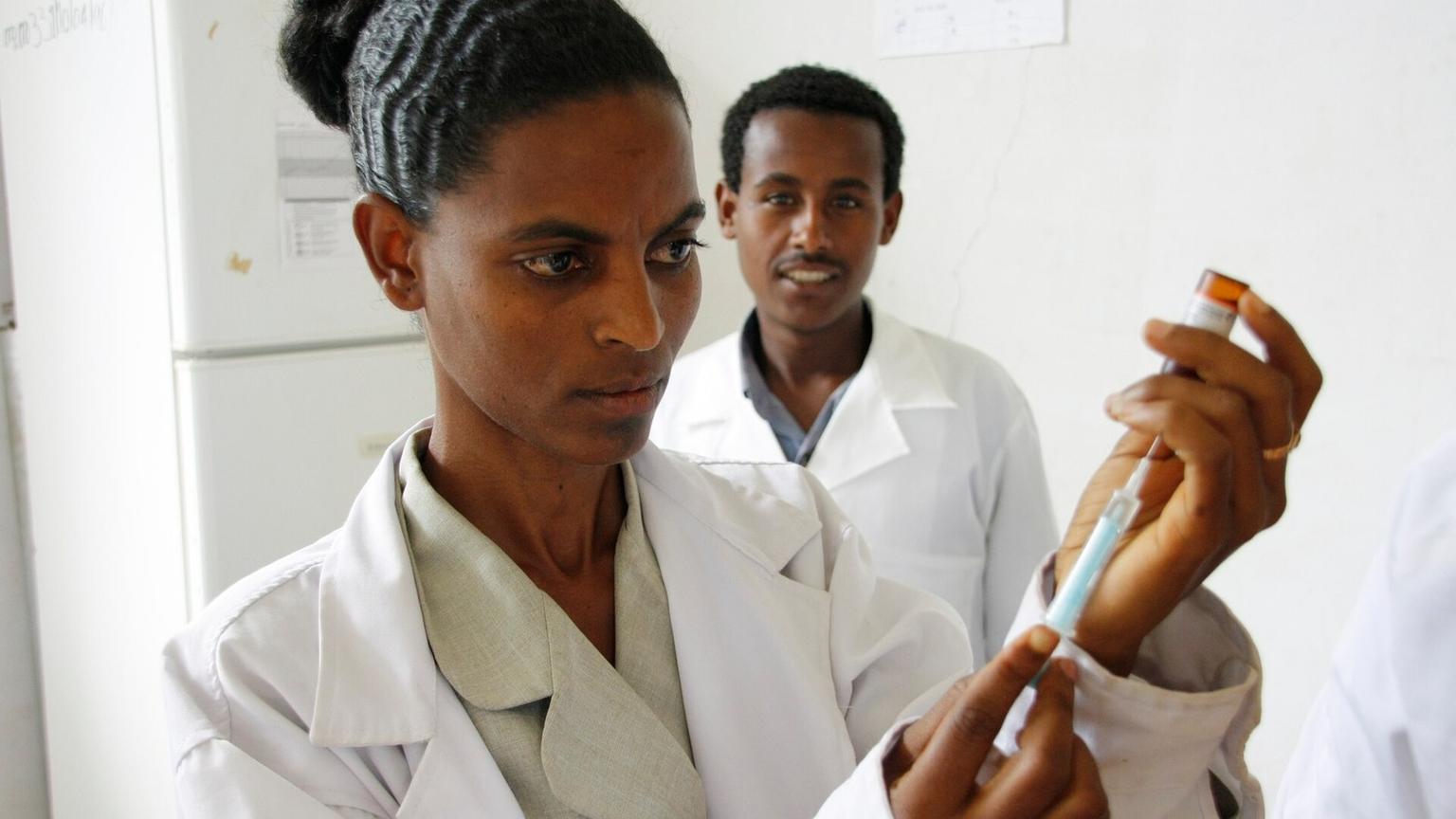
A government-commissioned survey has found that more than 82 percent of Ethiopian health institutions assessed failed to meet national standards, with compliance levels dropping significantly over the past four years.
The findings come from an assessment of adherence to the Ethiopian Health Institutions Standard, a framework jointly enforced by the Ministry of Health, the Institute of Ethiopian Standards, and the Ethiopian Accreditation body.
Fewer than one in five institutions assessed met the required benchmarks, according to the survey. Surveyors noted that the rate of compliance has declined over the four-year period covered by the assessment, rather than improved.
Advertisement
Details
The Ethiopian Health Institutions Standard sets requirements covering areas such as facility infrastructure, equipment, staffing, and operational protocols that health institutions are expected to meet to be considered compliant. Enforcement of the standard is shared across three bodies: the Ministry of Health, which oversees the health sector broadly; the Institute of Ethiopian Standards, which sets and maintains technical benchmarks; and the Ethiopian Accreditation body, which certifies conformity assessments.
The survey did not attribute the decline to specific causes, and no individual institutions found to be non-compliant were named.
The scale of non-compliance identified — more than four in five institutions assessed — represents the survey's headline finding. Surveyors' observation that this marks a deterioration from four years earlier, rather than a static baseline, distinguishes the report from a routine compliance snapshot.
Context
The survey's own four-year window is the central data point here. Compliance with the Ethiopian Health Institutions Standard was measurably higher at the start of that period than it is now, according to surveyors — meaning the current 82-percent failure rate reflects a regression rather than a persistent baseline. The survey does not specify what the compliance rate was four years ago in absolute terms, only that it has fallen since.
That trend line sits inside a joint enforcement structure spanning three separate government bodies. The Ministry of Health, the Institute of Ethiopian Standards, and the Ethiopian Accreditation body share responsibility for setting, monitoring, and certifying compliance with the same standard. A four-year decline occurring under that shared mandate raises the question of where, within the three-body structure, monitoring and follow-through broke down.
The survey itself offers no causal explanation for the decline. Whether the three enforcing bodies respond with revised enforcement mechanisms, or commission further survey rounds to track the trajectory, will determine whether this finding marks a turning point or becomes another entry in an already-declining trend line.