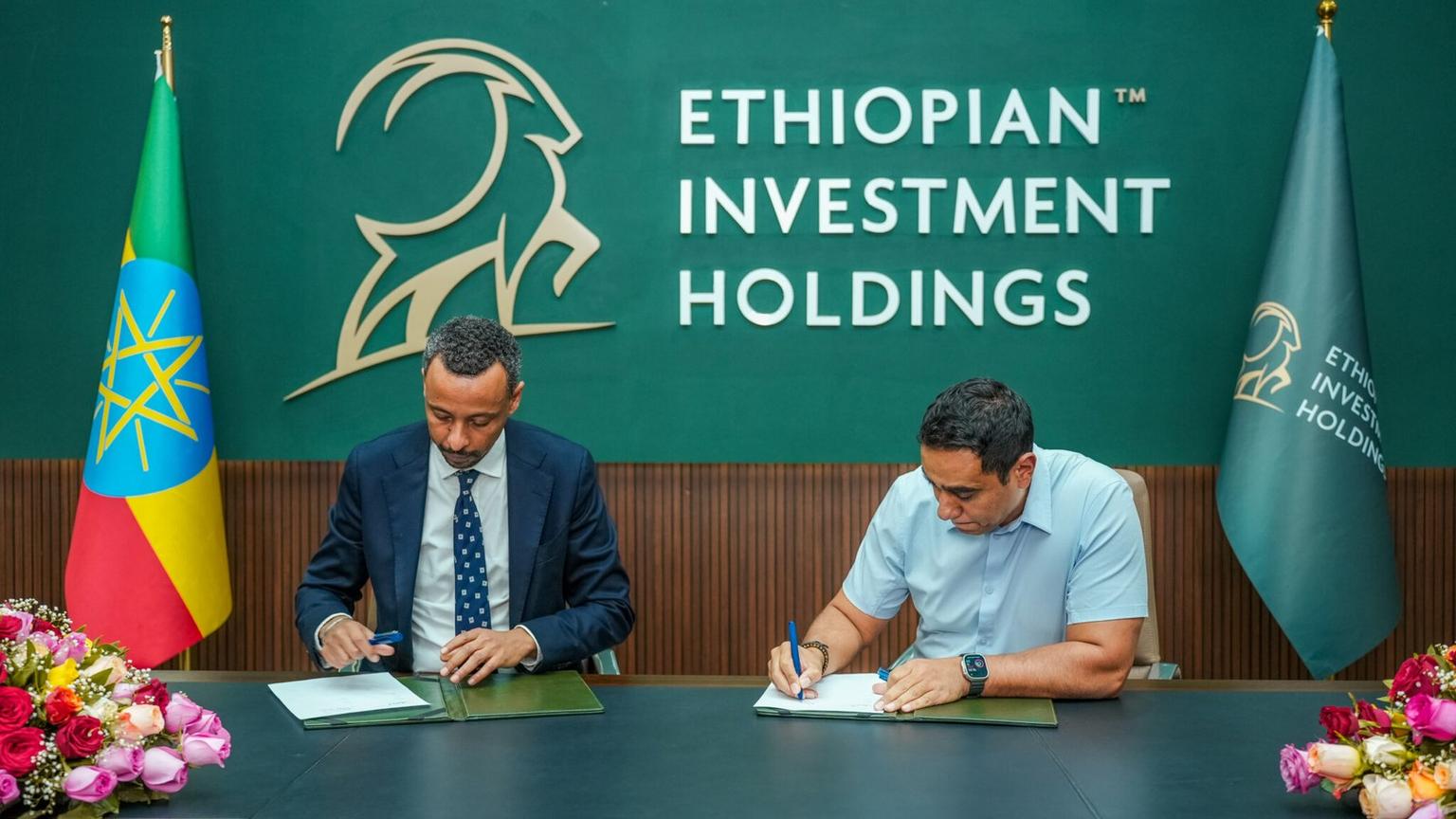
Ethiopian Investment Holdings (EIH) is seeking consulting firms to draft the legal and governance documents for the planned Youth Entrepreneurship Investment Bank (YEIB). Despite its name, the institution is designed as an investment fund rather than a deposit-taking bank.
A procurement notice published by the African Development Bank (AfDB) on 16 November 2026 asks consultants to prepare institutional and regulatory documents for the investment fund, its management company and any special-purpose vehicles the structure needs. The work includes board charters, compliance policies and conflict-of-interest arrangements. Expressions of interest are due by 9 December.
The proposed structure has two parts. The YEIB Fund would invest in eligible enterprises. A separate management company would handle investment administration, governance, capital mobilisation and regulatory compliance. It would also coordinate technical assistance for the businesses it backs.
Advertisement
Commercial banks mainly take deposits and make loans. The YEIB Fund would instead provide equity and quasi-equity financing to startups and growing businesses. That means taking ownership stakes or using instruments that combine features of debt and equity. Equity investments generally do not require scheduled interest and principal repayments. Investors earn returns through dividends, rising valuations or the eventual sale of their stakes.
The fund is aimed at micro, small and medium enterprises (MSMEs) led by young people and women. Many of these businesses struggle to borrow from banks because of collateral requirements, short operating histories and limited access to equity. Individual investments were originally planned at between $50,000 and $1 million. Agricultural businesses were expected to feature prominently.
The $80 million blueprint
The AfDB's 2024 appraisal proposed mobilising about $80 million across the institution's financing and support structures. It allocated $54 million to the equity fund, $12 million to technical assistance, $9 million to a guarantee mechanism and $5 million to the management company's initial capital.
The appraisal identified a financing gap of about $56 million against that plan. Its assumed contributions were $10 million from the Development Bank of Ethiopia, $12 million from the African Development Fund and $2 million from the Women Entrepreneurs Finance Initiative. Together those come to $24 million. That leaves $56 million to be raised from other investors and development partners.
These figures come from the original project design. They are not a verified current financing position, and the capital requirements, commitments and outstanding gap may have changed since implementation arrangements were revised.
YEIB is one component of the Agri-MSMEs Development for Jobs (AMD4J) programme. In May 2024 the programme received a $42.86 million grant from the African Development Fund, the AfDB Group's concessional financing arm. That grant supports the wider programme and is not the bank's initial capital. The appraisal put total programme financing at about $66.42 million, including contributions from the Ethiopian government, the Development Bank of Ethiopia, the Women Entrepreneurs Finance Initiative, local financial institutions and other partners.
From the Development Bank to EIH
Under the original plan, the Development Bank of Ethiopia was to lead the institution's creation. Its subsidiary, Ethio Capital, was to become the investment management company. The bank was also to act as anchor investor, contributing $2 million a year to the fund during the project period.
Responsibility for the YEIB component was later transferred to EIH, the state's sovereign wealth fund, established in 2021. An AfDB implementation progress report cited in September 2026 described the transfer as part of adjustments to the programme's institutional arrangements. The change puts the fund and its management company inside the government's investment holding structure. That has a bearing on how the institution is financed, governed and regulated.
The licences YEIB will need depend on its final legal form. Ethiopia's emerging capital market has its own rules for investment managers and securities intermediaries, separate from those governing commercial banks.
In September 2026, the Ministry of Labour and Skills said the institution was expected to begin operations before the end of the year. It said the bank would initially target more than 100 innovative startups and MSMEs. Officials said preparations were under way to meet regulatory requirements before financing could begin. As of the latest disclosed establishment arrangements, the institution's final legal structure, regulatory authorisations and capitalisation had not been confirmed.
The programme's original results framework targeted support for about 8,000 MSMEs across both components, including 2,900 under YEIB. It projected about 22,046 direct and 142,622 indirect jobs. Both sets of figures are targets, not outcomes.