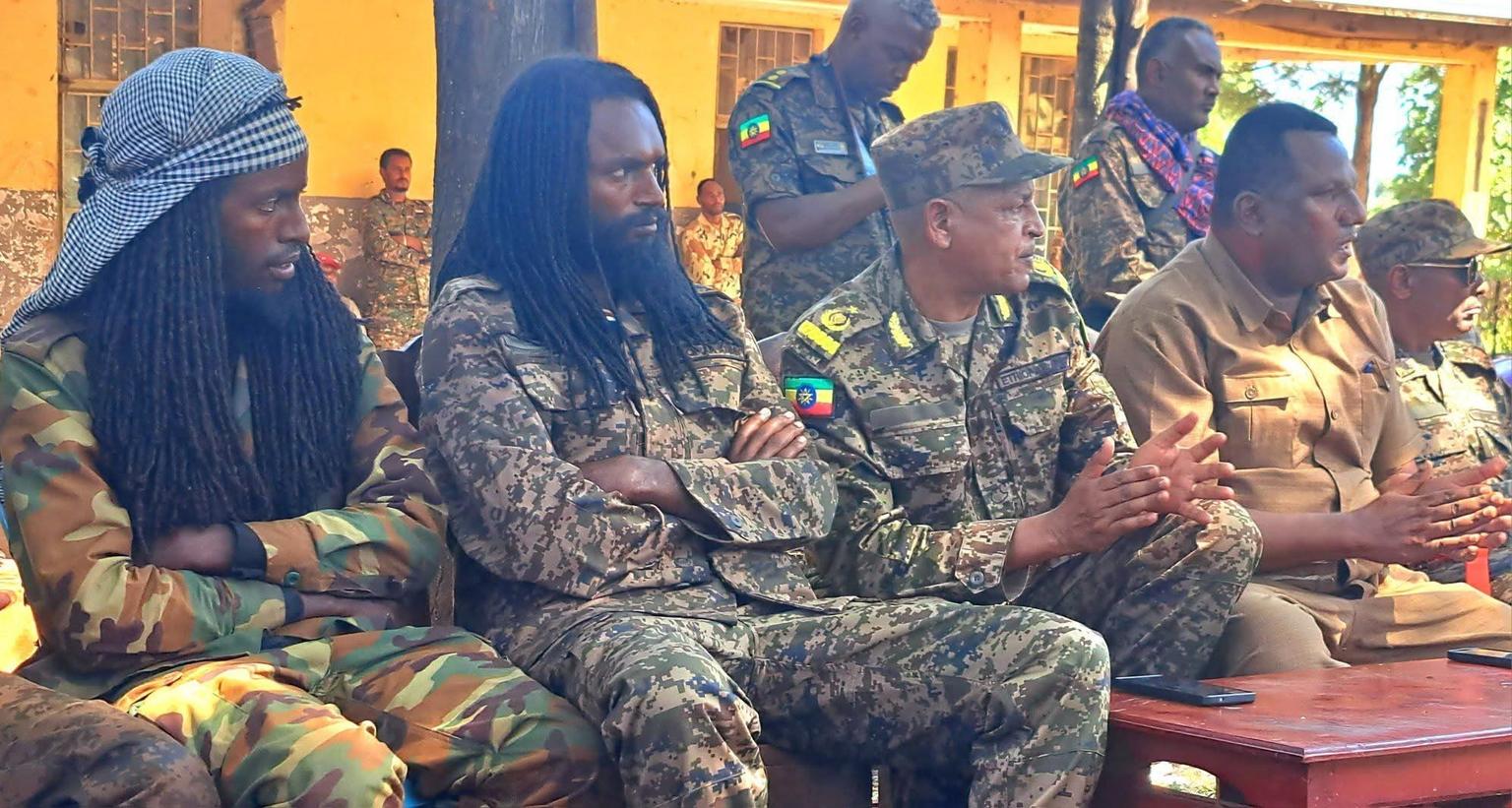
On 8 August 2026, fighters led by a former associate of Oromo commander Fekade Abdisa (Faqqadaa Abdiisaa in Afaan Oromoo) fought alongside regional security forces against Fano in western Oromia.
The fighters belonged to a faction led by Mosay (Moosee in Afaan Oromoo), one of two commanders who had broken away from Fekade's organisation. All three groups had surrendered to the Oromia authorities during 2025. Eight months after Mosay's surrender, his men were again carrying weapons, this time alongside forces identified with the regional government.
Fekade says members of his own former force have also joined the security services, while others remain armed in their communities against Fano.
Advertisement
The change matters in East Walaga and Horo Guduru Walaga, where both Oromo and Amhara residents have suffered killings and displacement. The OLA, breakaway factions, Fano, local militias and government forces have operated in the same districts, sometimes with shifting allegiances and competing accounts of who attacked civilians.
For years, the Oromo Liberation Army (OLA) has accused Fekade of operating as a government proxy, a charge he denies. His fighters have also been accused of killings, kidnappings and extortion in Horo Guduru Walaga and East Walaga, where they fought rival Oromo armed groups and were rarely reported engaging government forces.
A series of interviews in July 2026 reopened the dispute. Fekade discussed his imprisonment over a failed plot to bomb Addis Ababa during the 2011 African Union summit, his split with OLA commander Kumsa Diriba, known as Jaal Marroo ('Comrade Marroo'), the accusations against his fighters and his changing political outlook.
He also acknowledged a leaked telephone conversation about weakening Marroo's forces. The other participant was Aman File, a senior Oromo Liberation Front (OLF) official who had been in state custody when the conversation occurred.
Aman has publicly acknowledged the call while disputing its alleged purpose. Opposition politician Jawar Mohammed has accused both men of involvement in government-backed operations against the OLA, allegations they reject.
Their conflicting accounts, together with the subsequent surrender and remobilisation of former fighters, have brought renewed attention to the relationships between the OLF's political leadership, rival Oromo armed factions and the regional authorities.
From Kality Prison to the Walaga insurgency
A 2011 United Nations Monitoring Group report identifies a man named Fekadu Abdisu Gusu as the leader of one of three teams involved in a plan to bomb targets in Addis Ababa during the African Union summit in January that year.
The Monitoring Group concluded that Eritrea's external intelligence directorate conceived and directed the operation, presenting it as an OLF mission. The report describes preparations to attack civilian and government targets, including the African Union headquarters.
Ethiopian police arrested Fekadu and associates at his home on 3 February 2011. UN investigators interviewed him in detention the following month. Eritrea denied involvement and disputed the allegations.
In a July 2026 interview with the Afaan Oromoo channel Kallattii, Fekade acknowledged participating in the operation and receiving a life sentence. He rejected the government's portrayal of the plot as an attempt to kill civilians, maintaining that the intended targets were military.
Fekade also recalled two armed operations at the Finchaa sugar factory. He said he had participated in the second, during which his group fought and obtained money that was subsequently passed to the OLF and its fighters. He did not specify when the operation took place.
Fekade was among OLF-linked prisoners released during the political opening that followed Prime Minister Abiy Ahmed's rise to power in 2018.
His release coincided with a major change in Oromo politics. The OLF returned from exile after reaching an agreement with Abiy's government, but its leaders and armed commanders soon disagreed over disarmament.
An Abba Gadaa-led mediation effort, with Jawar Mohammed serving as secretary of a 71-member technical committee, produced a ceasefire on 24 January 2019 and a plan to move fighters into camps including Tolay for demobilisation and training. Contemporaneous reporting documented hundreds entering the programme; a March 2020 Addis Standard investigation put the figure close to 1,000. Marroo accused mediators of bypassing him and involving soldiers; Jawar said they had sought to meet him. Marroo rejected the process. The OLA formally split from the OLF in April 2019, and OLF chairman Dawud Ibsa later disowned armed groups using its name.
Fekade said his disputes with Marroo's fighters began while he was organising political activities in Horo Guduru after his release from prison.
The dispute with Marroo
Fekade claimed that fighters under Marroo detained him for three or four days on suspicion of being a government spy while he was organising political activities in Horo Guduru.
According to his account, the fighters took him towards Jardega Jarte. He said residents recognised him, protesters blocked roads and elders demanded his release. Fekade claimed the fighters released him under pressure from the local population.
He accused Marroo of ordering the detention, saying the fighters had been told they were capturing a government intelligence operative.
The interviewer questioned why Fekade would then seek to join an armed force commanded by the man he accused of ordering his detention. Fekade answered that he wanted to continue the armed struggle and asked another commander, Dinaras, to admit him as an ordinary member. He claimed he was permitted to obtain a weapon and join a unit operating in Horo Guduru. He also claimed he declined a proposed deputy command position because he had only recently left prison.
The interviewer then turned to the technical committee and asked whether Fekade had joined the demobilisation process. Fekade said fighters from his unit entered Tolay while he initially remained behind. He said Marroo subsequently telephoned to propose a meeting, but Fekade refused, citing his earlier detention.
According to Fekade, he later presented 12 conditions to the technical committee organising reintegration and expressed doubts about the agreement. He said he eventually entered Tolay after receiving a document bearing the OLF's seal and instructions, rather than an order personally issued by Marroo.
Asked why he returned to armed activity after Tolay, Fekade said he had rejected offers of government or private employment. He claimed he went back to Walaga to stop abuses by fighters already operating there and initially intended to work with them, rather than establish a separate force.
The attempt failed. Fekade accused commanders loyal to Marroo of spreading allegations that he had been sent by the authorities to infiltrate and disarm the movement.
Fekade described separate talks, arranged by elders, to reconcile his fighters with Marroo's units. He claimed they disagreed over command: Fekade wanted Horo Guduru and East Walaga fighters to remain independent of Marroo's western command.
Fekade said he demanded a record of earlier killings before unification, but claimed his rivals refused and insisted on Marroo's authority.
After the talks failed, Fekade accused Marroo's commanders of repeatedly attacking his positions, forcing his fighters to move between Horo Guduru and Gida Ayana.
By March 2023, the Rift Valley Institute described it as a breakaway group operating outside the OLA command structure.
Locally, the group was sometimes called Shene mootummaa, or the government's Shene, reflecting allegations that it was cooperating with the authorities.
Fekade maintained that he remained committed to the OLF's political objectives while rejecting Marroo's leadership.
The armed groups and the civilian toll
A 2023 Rift Valley Institute study documented overlapping conflicts involving the OLA, breakaway Oromo factions, Fano, government forces and unidentified gunmen. It described massacres and revenge attacks against Oromo and Amhara communities, and said identifying the armed groups behind particular incidents was often difficult.
A UN investigation heard Amhara witnesses attribute killings, sexual violence and looting in East and Horo Guduru Walaga to armed men they identified as OLA fighters. It also documented attacks on Oromo communities attributed to Fano and noted cases in which government or regional forces withdrew shortly before civilians were attacked. The various allegations do not establish that the armed groups were operating under a single command.
Agamsa and the accusations against his fighters
The most extensively documented allegations against Fekade concern the violence at Agamsa in Amuru district, Horo Guduru Walaga, in August 2022.
Regional security forces withdrew from the town on the evening of 28 August. Fekade's fighters arrived hours later, according to residents interviewed by the Washington Post for a report published in May 2023.
Amhara civilians were killed during the group's occupation of the town. The witnesses gave differing estimates: four Oromo residents reported between five and 18 deaths, while five Amhara residents estimated approximately 50. Among those reportedly killed were a monk and a nun.
Fekade denied killing civilians. He maintained that the dead were armed Amhara fighters.
His fighters also collected weapons from Oromo residents at the local primary school. Fekade acknowledged disarming people he believed might oppose him.
After his fighters withdrew, armed Amhara militias attacked Agamsa and surrounding communities on 30 and 31 August. The Ethiopian Human Rights Commission documented at least 60 Oromo civilians killed and 70 injured across the affected communities. Witnesses interviewed by the Washington Post put the death toll at more than 100.
Some of the attackers came from neighbouring Amhara region, according to the Ethiopia Peace Observatory's account.
Witnesses also reported that Fekade had helped some Amhara residents escape Agamsa before the subsequent violence.
In successive attacks on the same town, residents described Amhara civilians being killed while Fekade's men were present and Oromo civilians being killed after another armed force arrived.
Fekade's decision to disarm residents became central to accusations that he had left Oromo communities vulnerable to the attack.
In his July 2026 interview, he said he had personally entered Agamsa alongside his fighters and local residents to confront Amhara gunmen.
He rejected allegations that his men had taken weapons from Oromo residents and sold them to Fano.
Instead, he said more than 70 guns had been distributed to local Oromo communities, including residents of Agamsa, Migir and Jawwaja, and that the weapons remained in their possession.
His account did not establish when the guns were distributed relative to the subsequent attacks.
Other allegations against Fekade's fighters concerned killings, livestock seizures, extortion and kidnappings in Jardega Jarte and surrounding districts.
Six residents interviewed by the Washington Post described demands for money or livestock, while seven families reported kidnappings for ransom.
Following an attack on an Orthodox church in Horo Guduru in March 2021, in which 29 people were reported killed, the OLA denied responsibility and publicly pointed towards Fekade.
He has denied responsibility for attacks on civilians and rejected allegations of extortion and kidnapping.
In the Kallattii interview, Fekade also disputed responsibility for violence in Kiramu district, saying that other armed groups, including fighters loyal to Mosay, had operated there.
A family's account of killings by Mosay's men
When Mosay's faction surrendered in December 2025, residents of Gida Ayana and Kiramu told BBC Afaan Oromoo that men under his command had been responsible for killings and ransom kidnappings.
The BBC identified the commander as Moosee Asaffaa. One resident described the killing of his brother's wife and three children in Kiramu in May 2024.
The family had previously fled attacks by Fano fighters who, according to the resident, had stolen 38 cattle. The father later obtained a weapon from the authorities and returned to his home area.
The resident said Mosay's fighters subsequently attacked the family at their home, killing the mother and all three children.
The victims were identified as Mabraatee Taakkalaa Dhibbaa and her children Abdii Maangoo Gonfaa, a 16-year-old preparing for his eighth-grade examinations; Jiituu Maangoo Gonfaa, aged 13; and four-year-old Bochoo Maangoo.
Their relative alleged that Mosay had ordered the attack.
He also named two alleged participants, Guddinaa Abbabaa and a man identified as Gammachiisaa, whom he said were in government custody but had not been convicted when he spoke to the BBC in December 2025.
Other families described being forced to pay large sums for the release of kidnapped relatives.
One family said armed men demanded 500,000 birr for a captive. The relatives managed to raise 150,000 birr, which they said secured his release. Other residents reported ransom demands reaching one million birr.
The accounts also described men being accused of passing information to the government and subsequently attacked or killed.
Residents said the armed groups were largely made up of people from their own communities. Some alleged perpetrators were known personally to the families accusing them.
Mosay's surrender left those families demanding criminal proceedings rather than reintegration alone.
Was Fekade working for the government?
The OLA has accused Fekade of working for the authorities since at least 2021. Its officials say his organisation posed as part of the Oromo insurgency while operating against Marroo's forces and contributing to attacks later blamed on the OLA.
Fekade's account of leaving the Tolay programme was challenged by opposition politician Jawar Mohammed.
During his July Kallattii interview, Fekade was asked about Jawar's allegation that he had been employed in an Ethiopian military intelligence unit.
He called the allegation false and accused Jawar of repeating information supplied by political opponents. He also rejected claims that he was organising new armed groups in East Shewa and other parts of Oromia.
In a Telegram statement on 25 July 2026, Jawar set out more detailed accusations about Fekade's activities after Tolay.
Jawar said government commanders had informed him that some returning OLF fighters had already been assigned to security duties, naming Fekade among them.
He claimed he subsequently confirmed that Fekade had been placed under Oromia Police intelligence and attached to a joint federal-regional counter-insurgency task force before being sent to Walaga.
Jawar said he had raised the matter with the OLF leadership at the time.
He also accused fighters under Fekade's command of serious abuses against civilians and called for an independent investigation.
Questions about Fekade's relationship with the authorities had arisen long before Jawar's statement.
Residents interviewed in 2023 said his fighters sometimes clashed with the OLA but seldom engaged government troops. Their arrival in Agamsa shortly after regional forces withdrew also fuelled suspicions of coordination.
The Rift Valley Institute examined allegations that regional authorities were sponsoring armed groups impersonating the OLA in 2023. It found no clear evidence that the government had instigated or funded the violence attributed to those groups.
The accusations of government-backed armed groups and the deliberate blaming of attacks on the OLA also resemble practices documented in a separate investigation.
In February 2024, Reuters exposed the activities of Koree Nageenyaa, a secret security committee operating in Oromia.
The investigation, based on interviews with current and former officials and supporting documents, found that senior officials had ordered extrajudicial killings and unlawful detentions in the campaign against the OLA.
Among the incidents Reuters examined was the killing of 14 shepherds in Oromia in 2021. Officials familiar with the case said government forces were responsible, although the authorities had blamed the OLA.
The findings established that security officials had, in at least one documented case, blamed the OLA for killings attributed by informed officials to government forces.
That practice resembles an element of the accusations made against Fekade's group, although the Reuters investigation did not identify him as a participant or establish that Koree Nageenyaa directed his fighters.
The call with Aman File
A leaked telephone recording is central to allegations that Fekade and figures in the Oromo Liberation Front's political leadership sought to undermine Marroo's armed movement. The other participant, Aman File, was an OLF national council member being held in state custody when the conversation took place. Both men have acknowledged the call.
Fekade was commanding fighters in Horo Guduru when he spoke with Aman. He welcomed news that Marroo's forces were leaving his area. Aman asked why OLA fighters were reportedly withdrawing from several places. Fekade said he had heard they were heading to West Walaga, where Marroo was based, to establish camps for retraining, political re-education and reorganisation.
He also said he had heard that Marroo's movement had adopted the name ABO-WBO (OLF-OLA) to distinguish itself from the OLF. Fekade urged Aman and their associates to take advantage of the withdrawal and become more active in disrupting the regrouping forces.
The discussion concerns a withdrawal from Fekade's area and a proposed regrouping in West Walaga, not the 2019 Tolay disarmament. OLA adviser Jirenya Gudeta separately described Marroo's recall of fighters for refresher training in September 2024 BBC reporting. The accounts resemble each other, but the recording has not been independently dated, so they cannot conclusively be linked to the same troop movement.
Aman addressed the recording in a Kallattii interview on 17 July 2026.
A relationship dating back to the student movement
Aman said he had known Fekade since the Oromo student movement around 1999–2000, when Aman was at university and Fekade was still in secondary school.
The two were later imprisoned together for approximately five years, he said, before taking different paths into the OLF's armed struggle.
Aman said they met again in Shambu after the OLF returned from exile in 2018 and began reopening offices.
Aman says he was trying to protect his family
Aman said his younger brother, Dassale File, was abducted while Aman was in prison.
He said the family feared his brother had been killed before he was eventually released. Aman did not identify the abductors, saying only that they were armed men operating in the countryside under the OLA's name.
Another relative, a teacher travelling towards Saqala, had been abducted and was believed to have been killed, he said.
Aman also described threats against family members and the displacement of residents from his home area. Families were being forced to pay money to cultivate their land or transport their crops, he said, while armed men threatened relatives over their contacts with OLF officials.
Fekade was operating in the same area. Aman said he contacted him because he knew him personally and wanted him to protect relatives and other civilians, asking him to safeguard their lives, property and security.
The interviewer challenged Aman's family-protection explanation because the recording discusses weakening Marroo's armed organisation. The reference to its planned camps and reorganisation goes beyond a request to safeguard relatives. Aman said his aim was to stop armed men accused of abusing civilians, not to destroy the OLA itself, and denied conspiring with Fekade to dismantle it.
Aman maintained that the OLF's political leadership in Addis Ababa neither commanded the OLA nor had the power to dismantle it.
Fekade subsequently acknowledged the call and defended efforts to weaken Marroo's forces as a way of protecting civilians. His discussion of disrupting the regrouping also concerned Marroo's military strength, not only the conduct of individual fighters.
Did Aman establish who was responsible for the attacks?
The interviewer also confronted Aman with allegations that Fekade's fighters had killed civilians, kidnapped residents and extorted money in Horo Guduru and East Walaga.
Aman was asked whether he had established that Fekade's men were not responsible for the attacks affecting his own relatives.
He said he had spoken at length with his brother after his release and had also gathered accounts from other residents.
But he did not publicly identify those responsible or clear Fekade of involvement.
Instead, he argued that residents knew who had harmed them and that the lack of a functioning avenue for accountability was preventing them from bringing cases forward.
Aman said anyone responsible for killings or other crimes would eventually have to answer for them, including Fekade if the accusations against him were established.
Aman argued that speaking with Fekade neither made him responsible for any crimes Fekade might have committed nor amounted to endorsing those acts.
Allegations of cooperation with government forces
Aman was also asked about separate accusations by Jawar Mohammed that he and Fekade had coordinated armed activity with Oromia security forces in Arsi, East Shewa and other areas.
Aman denied the allegations, saying he had spent the period surrounding Ethiopia's June 2026 elections campaigning for the OLF, including in Horo Guduru, and otherwise working from the party's Addis Ababa offices.
He denied travelling to the areas where the attacks were alleged to have occurred or directing government security personnel.
Aman said that speaking with Fekade did not mean he supported or had joined the ruling Prosperity Party.
His wider political position differed from Fekade's. Aman maintained that the OLF opposed the ruling party and was pursuing a peaceful political strategy. He also rejected suggestions that the party's opposition to an armed alliance advancing from northern Ethiopia amounted to support for Abiy's government.
Fekade, by contrast, acknowledged in his own interview that his views had changed and that he now supported the regional government.
Aman also declined to establish whether Fekade's fighters were responsible for attacks against his relatives, while insisting that any perpetrators should eventually face the law.
Three factions surrender
By 2025, Fekade's original force had divided into three groups. Mosay, also known as Moosisaa, had broken away and established his own command, and Yadessa (Yaaddessaa in Afaan Oromoo), who had served under Mosay, subsequently split from him.
Fekade dated Mosay's departure to approximately 2015 in the Ethiopian calendar, corresponding to 2022–23 Gregorian. He said they had not maintained a command relationship since separating.
In a BBC Afaan Oromoo interview published on 26 December 2025, Jirenya Gudeta, an adviser to the OLA's supreme commander, said Fekade had previously belonged to the organisation but ceased to be a member after entering the Tolay reintegration programme.
Jirenya said the OLA had also tried to bring other armed groups back under its command before they surrendered to the government. Some fighters had returned, he said, while others continued operating independently.
He described attempts to summon commanders for discussions about their conduct and military organisation. Among those he named as failing to attend were Sanyi Negassa, Mosay and Yadessa.
Jirenya attributed the groups' separation to their refusal to follow the OLA's central command and accused some former members of exploiting their weapons to commit abuses against civilians.
He rejected the suggestion that the OLA was disowning the factions simply because they had surrendered. He said they had ceased to belong to the organisation when they stopped accepting its orders.
The three factions surrendered separately during 2025.
Fekade's group entered the government's reintegration process around August, according to the Horo Guduru zonal administration.
Yadessa surrendered with 57 fighters on 28 September, followed by six others that evening. Local officials subsequently put the combined number of fighters who had surrendered with Fekade and Yadessa at approximately 120.
Mosay surrendered with about 200 fighters in Gida Ayana in December.
The Gida Ayana district communications office publicly marked Mosay's surrender on 20 December 2025. In a Facebook statement, it described approximately 200 fighters voluntarily laying down their weapons after peace appeals by elders and the government. The administration said the reception was attended by East Walaga zonal chief administrator Waaggarii Nagaraa and senior Ethiopian military officers.
The district office referred to a peace agreement and urged former adversaries to unite against a common enemy. The post did not disclose the agreement's text or explain what assignments the former fighters would receive.
According to the zonal administration, those surrendering would undergo rehabilitation and could subsequently enter civilian life or take up other assignments.
The precedent set by Sanyi Negassa
On 1 December 2024, Sanyi Negassa (Sanyii Nagaasaa in Afaan Oromoo), formerly commander of the OLA's Central Zone, signed a peace agreement with Oromia President Shimelis Abdisa.
The signing was publicly announced by the regional government and attended by senior federal military officials, including Ethiopian National Defense Force Chief of Staff Field Marshal Birhanu Jula.
In a BBC Afaan Oromoo report published on 30 September 2024, OLA adviser Jirenya Gudeta said Marroo summoned all the organisation's fighters and commanders to West Walaga for talks after complaints of disarmament and robbery against civilians in Horo Guduru and the Central Zone. Many attended refresher training and returned, he said. But Sanyi and Ebbisa, then commanding in the Central Zone and Horo Guduru respectively, stayed behind. Jirenya alleged they later opposed the return of the retrained fighters, leading to clashes.
Sanyi accused the OLA leadership of authoritarianism. The OLA claimed he had been expelled for misconduct and alleged he was plotting with outsiders against its commanders, accusations BBC could not independently verify. Sanyi denied working with the government.
The regional government subsequently announced that hundreds of fighters from Sanyi's faction were entering rehabilitation camps. Reports in December 2024 put the number at more than 800, although the figures were not independently confirmed.
Sanyi said the agreement addressed security arrangements, integration of former fighters and compensation for damage caused by the conflict.
The full written terms were not made public, including the arrangements governing the former fighters' eventual deployment.
On 21 February 2025, the Oromia government announced senior appointments for three former commanders associated with the agreement.
Sanyi became security adviser to the Oromia president at bureau-head level.
Oromiya Rebuma, who had served as a deputy commander in the OLA's Central Zone, was appointed deputy head of the Oromia Attorney General's Office.
Tolera Regassa, known by his nom de guerre Shurrube (Shurrubbee in Afaan Oromoo), became deputy head of the Oromia Administration and Security Bureau.
Shurrube had previously commanded fighters involved in clashes with Fekade's group.
In the Kallattii interview, Fekade described a complicated relationship with him. He said they had travelled together and maintained personal contact, even while their forces were involved in repeated fighting around Akayyu and neighbouring areas.
Fekade alleged that Marroo had instructed Shurrube's fighters to attack his positions. He said Shurrube was not personally responsible for initiating their conflict, blaming orders from higher commanders.
Their opposing forces had suffered casualties during those clashes, according to Fekade.
Although Sanyi's agreement itself was not published in full, the government announced the settlement, identified its main signatory, reported the movement of fighters into camps and publicly disclosed subsequent appointments.
Mosay's surrender was also publicly announced, with a reference to a peace agreement and a military presence at the ceremony. Unlike Sanyi's arrangement, however, the public record does not identify formal posts assigned to Mosay or his fighters or explain their subsequent command arrangements.
For Fekade and Yadessa, local authorities announced the return of fighters to the rehabilitation process without similarly detailed public accounts of negotiated terms or appointments.
Yet Fekade himself says some of his former fighters joined the security services, and Mosay's men have since been documented fighting alongside regional forces.
Fekade's change of position
Fekade's July interview also showed how far his political position had shifted since his years in armed opposition.
He acknowledged that he had changed his views on Ethiopia's political future. Having previously supported a struggle for an independent Oromia, he argued that Oromo political influence within Ethiopia should now be defended rather than abandoned.
He described the changes since 2018 as achievements of the Oromo struggle and argued that Oromo political divisions threatened to undo them.
Asked directly whether the current government should be supported, Fekade answered affirmatively.
He maintained that he had originally joined the armed struggle against the TPLF-led government, rather than against the present authorities. He acknowledged returning to the countryside after Abiy came to power but said his position had evolved as he observed subsequent political developments.
Fekade also expressed hostility towards the TPLF and accused elements of Marroo's organisation of maintaining relations with it. He claimed to have encountered Tigrayan personnel assisting rival fighters during clashes in western Oromia.
Those claims were not accompanied by independently verifiable evidence in the interview.
Former enemies on the same side
Fekade told Kallattii in July 2026 that between 300 and 400 fighters from his organisation had returned. Some, he said, had resumed civilian life, others joined the security services, and another group continued carrying weapons locally against Fano.
He placed those armed men around Agamsa, Guduru and Abe Dongoro, areas where his organisation had previously operated.
He also acknowledged continuing personal contacts with fighters associated with Marroo's western command, saying some former members of his organisation remained within the OLA, including at brigade-command level.
He denied maintaining a separate armed organisation in East Shewa, Arsi or other districts where Jawar had accused him of directing fighters.
According to ACLED, Fano militia activity in western Oromia increased by 80% between 1 January and 21 August 2026 compared with the same period in 2025.
The conflict monitor linked the increase partly to the establishment of the Bizamo Command, a Fano formation that emerged in Horo Guduru and East Walaga in December 2024 and subsequently became associated with the Amhara Fano National Movement.
Agamsa itself was attacked again in June 2026. Residents and officials reported 11 deaths, most of them members of a local militia, after federal troops had withdrawn from the area.
On 19 August 2026, the Bizamo Command ambushed a military convoy escorting civilian buses, ambulances and bank vehicles near Tulu Lencha.
ACLED reported at least 16 deaths, including six passengers, a patient, a midwife, three bank managers and five soldiers. The attack prompted demonstrations by residents and students demanding protection from Fano attacks.
On 8 August, men under Mosay's leadership fought alongside the Oromia Gadaa Commando and local kebele militia against the Bizamo Command in Fandaqaa kebele, Gida Ayana district.
ACLED documented the clash, describing the cooperation as the first recorded instance of OLA-linked fighters coordinating with government security forces against Fano.
Its local sources said Mosay's men provided cover for the Gadaa Commando during the fighting in an effort to protect civilians from the Fano attack.
The fighters' participation may have reflected a local response to Fano rather than a formal transfer of command or a broader political agreement with the government.
The Gadaa Commando itself has become a source of controversy.
Residents and conflict monitors have described it as a regional security formation fighting Fano. Amhara residents have also accused men operating under that name of killings, reprisals and attacks on property in East Walaga.
The regional government disputes the force's existence. Gen. Hailu Gonfa, an adviser to the Oromia president, told BBC Afaan Oromoo that the government had no organisation called the Gadaa Commando.
In November, the Oromia regional communications bureau acknowledged attacks against civilians in Kiramu, Abe Dongoro and Gida Ayana. It blamed groups it described as Amharic-speaking and Afaan Oromoo-speaking Shene, while residents gave competing accounts of responsibility. Oromo residents blamed Fano for killings and burned homes. Separately, Amhara residents of Tulu Gena accused regional forces of killing civilians in late October; those allegations and the identity of the unit they named remain disputed.
No comparable public account has established that Yadessa's former fighters have participated in government security operations since their surrender.
Surrender without settling the allegations
The reintegration of the three factions has left victims and their families seeking answers about crimes attributed to the fighters.
The allegations span several years and involve different commanders, groups and periods of control. Some were made against Fekade's original force, while others concern fighters who had already split from him.
Families interviewed in Gida Ayana and Kiramu identified alleged perpetrators by name and described killings, ransom payments and threats against relatives.
Some told BBC Afaan Oromoo that men accused of involvement were already in government custody. Their accounts did not establish whether formal prosecutions had begun or what subsequently happened to those cases.
The wider surrender programmes have not been accompanied by a public accounting of how the authorities intend to investigate allegations of killings, kidnapping and extortion by individual fighters.
In its December reporting, the BBC examined Ethiopia's Amnesty Proclamation No. 1096/2018, which provided amnesty for specified earlier political offences but excluded certain cases involving loss of life. That law did not itself establish what legal protection, if any, was offered to fighters surrendering in 2025 over acts allegedly committed in later years.
Waqwaya Bayisa, a former United Nations legal official interviewed by BBC Afaan Oromoo, argued that surrender and political reconciliation could not excuse serious crimes committed against civilians.
In his July interview, Aman said that speaking with Fekade did not make him responsible for Fekade's conduct or protect Fekade from accountability if he had committed crimes.
Aman argued that residents knew who had killed, kidnapped or extorted their relatives, but were unable to bring effective legal proceedings under prevailing conditions.
He said he had heard detailed accounts from his own relatives and other residents, including people who had survived abductions.
Fekade, in his July interview, was also asked whether he was prepared to take responsibility for crimes committed in Horo Guduru and East Walaga.
He said he was ready, but again denied that he or fighters under his command had committed the alleged abuses. He urged journalists to speak directly to residents of the areas where his group had operated.
His former fighters now occupy different positions. Some have returned to civilian life, some have joined the security services and others continue to carry weapons against Fano.
The government has publicly described their surrender and rehabilitation, but has offered little detail about what will happen to allegations of civilian abuses attributed to their former organisations.