In January 1934, a 21-year-old Japanese noblewoman was chosen as a prospective bride for an Ethiopian aristocrat. The match began with a newspaper search for a wife. Within months it had attracted attention far beyond Japan and Ethiopia, before the proposed wedding collapsed.
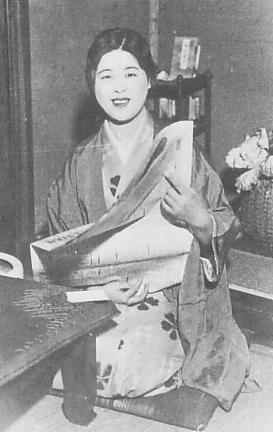
The woman was Kuroda Masako, daughter of a Japanese viscount. The prospective groom was Lij Araya Abebe, a member of an Ethiopian noble family and a relative of Emperor Haile Selassie. Newspapers in Japan, Europe and the United States described them as a Japanese princess and Ethiopia's crown prince. Neither description was accurate.
Their story survives in Japanese newspaper archives, Kuroda's own writings and diplomatic records. In a 2025 study of the engagement, historian Federica Costantino traces how a proposed marriage became a subject of debate over race, empire and the independence of Ethiopia.
Advertisement
Why an Ethiopian nobleman sought a Japanese bride
The idea grew out of an Ethiopian interest in Japan that preceded the marriage proposal.
Japan and Ethiopia signed a treaty of amity and commerce in 1930, the year a Japanese representative attended Haile Selassie's coronation. The following year, Foreign Minister Heruy Wolde Selassie travelled to Japan at the head of an Ethiopian delegation. Araya accompanied the mission.
The delegation visited Japanese factories, including aircraft, shipbuilding and arms works. In a book written after his return, Heruy described Japanese factories producing everything from paper and machinery to aircraft and weapons. He argued that Ethiopia needed to devote greater effort to industry. An online exhibition by Japan's National Diet Library describes the book and reproduces a photograph of the delegation wearing Japanese clothing.
Ethiopia's 1931 constitution drew on Japan's Meiji Constitution of 1889, according to Costantino's research.
Araya, born in 1909, sought a Japanese bride partly, Costantino writes, to promote friendship and investment between the countries.
Japanese lawyer Sumioka Tomoyoshi took on the role of matchmaker. Sumioka had connections to Japanese ultranationalist circles and heavily promoted the match. He publicised Araya's wish in the Asahi Shimbun, seeking a Japanese woman aged 19 to 24 who was considered attractive and spoke English.
About 20 women applied. Kuroda, the daughter of a viscount, emerged as the preferred candidate in January 1934.
Kuroda Masako wanted more than a wedding
She wrote about the proposed move to Ethiopia and about the opportunities she believed it might offer Japanese women.
In a booklet titled The Dawning Ethiopia, she explained that she had long been interested in foreign countries and did not regard the marriage as an impulsive adventure. In an essay in the women's magazine Fujin kōron, she argued that Japanese women could become pioneers abroad and that Japan and Ethiopia shared a similar national spirit.
The attention was intense. Costantino's research records that Kuroda received letters from people who hoped to accompany her to Ethiopia as nurses, attendants, doctors or bodyguards. Businesspeople approached her about promoting Japanese enterprises there.
One male newspaper interviewer asked whether her interest in an Ethiopian husband meant she was dissatisfied with Japanese men. Kuroda disagreed.
Her ambitions were complicated. Kuroda argued that women should be able to take a more active role overseas. According to Costantino, she rejected ethnic prejudice, but her ideas about gender equality also drew on support for Japan's own empire-building.
How a proposed marriage became an international affair
Ethiopia had defeated Italy in 1896. Japan had defeated Russia in 1905. In a world dominated by European colonial powers, those victories gave both countries symbolic importance well beyond their borders.
The proposed marriage attracted interest in parts of the African American press, where commentators saw the possibility of closer cooperation between two independent, non-Western powers, although Japan was itself a colonial power. Pan-Asian activists likewise saw in it the potential for a non-white alliance between the two countries.
But the headlines exaggerated the couple's rank and the governments' involvement. Kuroda was not a member of Japan's imperial family. Araya was related to the Ethiopian emperor but was not the heir to the throne. There was no formally arranged marriage between the two states.
Italy, which had designs on Ethiopia, was alarmed by the prospect of Japanese involvement there, according to historians of the episode. Japan's imperial establishment also had concerns about the match's implications for its peerage and racial status.
In March 1934, Japan's foreign ministry disclaimed any involvement in the match during parliamentary proceedings.
Why the wedding never happened
The marriage plans fell apart in 1934. Historians caution against attributing the failure to a single government or incident.
Costantino's study points to Italian and wider European pressure, Ethiopian concern about relations with Western powers, and Japanese racial and gender hesitations. Another historian of the period, J. Calvitt Clarke III, emphasises that neither government had sponsored the marriage in the first place.
Haile Selassie later complained about press reports that misdescribed the proposal as a marriage involving his crown prince. Foreign Minister Heruy also rejected the sensational versions of the story.
Kuroda had said she would go to Ethiopia even as a private citizen if the authorities would not approve. The engagement's collapse did not erase the sympathy for Ethiopia among parts of the Japanese public.
When Italy invaded Ethiopia in October 1935, Japanese activists still expressed solidarity. But Japan's government declined to provide the military assistance Ethiopian representatives sought.