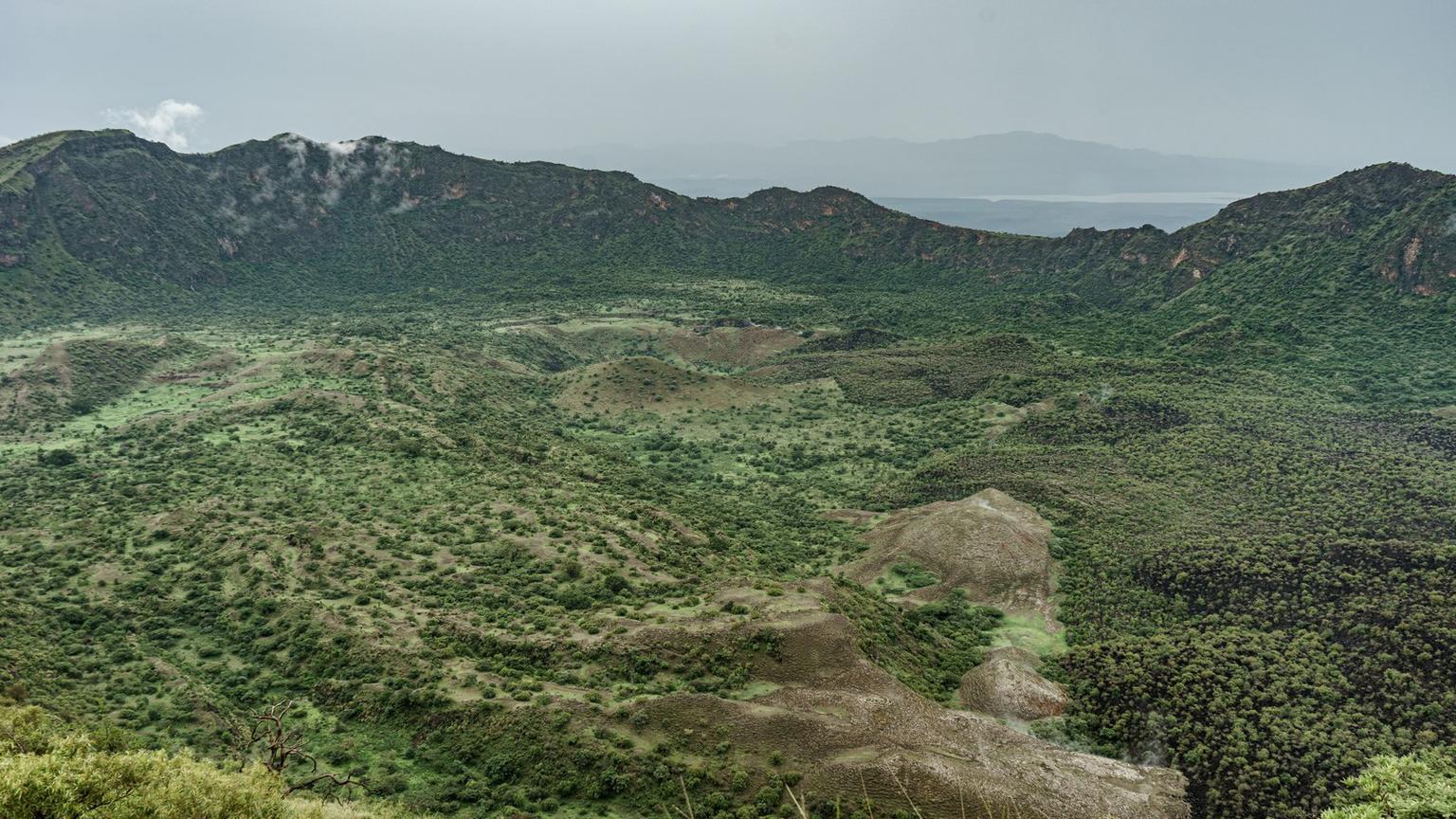
Fentale volcano, about 100 kilometres from Addis Ababa, released at least 38,200 tonnes of methane over about three months in early 2025 without erupting, according to a study published in Nature Geoscience on 19 November 2026.
The researchers, led by Edna Dualeh of the University of Bristol and including a scientist from Addis Ababa University's Institute of Geophysics, Space Science and Astronomy, put the peak emission rate at 157 tonnes an hour. They said that was comparable to major industrial gas blowouts and roughly 10,000 times the methane rates measured at other volcanoes. The Dutch space research institute SRON, whose scientists took part, called it the largest methane outburst yet measured from a volcano.
The volcano also gave off at least 2.9 million tonnes of carbon dioxide, at rates the paper says are higher than any previously measured from a volcano that was not erupting.
Advertisement
The gas followed a magma intrusion that began near Fentale on 17 December 2024, pushed about 50 kilometres north by 29 December and kept opening until mid-March 2025. About 1.4 cubic kilometres of magma stayed underground. The earthquakes that came with it damaged homes, schools, health centres and roads in Afar and Oromia. In January 2025 local authorities said 90,000 people were at risk and about 75,000 were being evacuated, according to a UN humanitarian update at the time.
An instrument on the European Space Agency's Sentinel-5P satellite first picked up the methane plume on 19 January 2025, and a satellite operated by the company GHGSat traced it to Fentale's caldera on 31 January. About 90% of the methane came out in the first month, and emissions were detected until 9 April. The caldera floor sank by about 22 centimetres between 15 and 23 January, and part of it collapsed on 14 February, setting off a small new rise in emissions.
The authors propose that the magma broke an impermeable cap under which methane from hydrocarbon-rich sedimentary rock had been trapped. At the slow leak rates seen elsewhere in the rift, that much gas would build up in 100 to 200 years, which they note matches Fentale's last known eruption in about 1810. No isotope measurements of Fentale's gas exist, so the sedimentary origin is inferred from regional data and geology.
“The observation of a methane outburst from a volcano was a complete surprise,” Dualeh said in a University of Bristol statement.
The release is less than 0.1% of the oil and gas industry's annual methane emissions, and the university said it would have no noticeable effect on today's climate. Dualeh said such bursts are not accounted for in the natural methane budget, volcanic hazard assessments or climate models. Both gases are colourless and odourless and can displace oxygen. Fentale's caldera is uninhabited, they note, but other calderas in the rift are home to large populations.