Eritrea's foreign ministry on Thursday, 26 November, accused Ethiopia of using maritime diplomacy and regional security forums to mask territorial ambitions in the Horn of Africa. On the same day, Prime Minister Abiy Ahmed told parliament that Ethiopia would not invade Eritrea.
The ministry's Research and Documentation Division published the document on the government website Shabait under the title "Ethiopia's Calculated Use of Maritime Diplomacy to Camouflage its Irredentist Ambitions in the Region". It accused the ruling Prosperity Party of seeking to "manufacture a veneer of international legitimacy" around its demand for "sovereign sea access". Asmara described that demand as territorial revisionism.
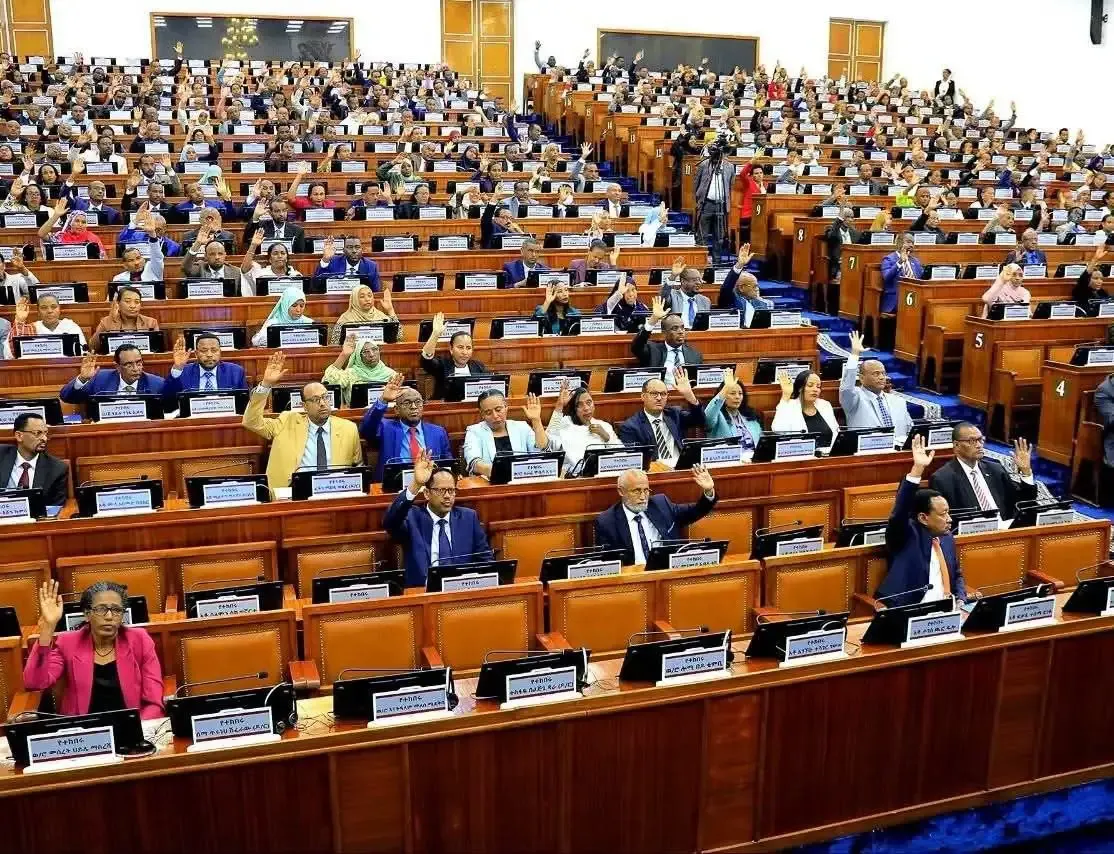
Addressing the House of Peoples' Representatives, Abiy rejected claims that Ethiopia planned to attack its neighbour. "Now they say, 'Ethiopia is going to invade Eritrea, Ethiopia will wage an invasion for the Red Sea'--we will not wage an invasion. Invasion is not needed; we want it peacefully and through dialogue," he told lawmakers.
Advertisement
Abiy said Ethiopia had offered to supply Eritrea with electricity at Ethiopian domestic prices and had proposed joint road and port projects, but that the Eritrean government had rejected them. He also urged Eritrea to "stop arming Ethiopia's enemies" and warned that "destruction will fall upon Eritrea" if its ruling party persisted in what he called incorrigible mistakes. Asmara has denied backing rebels in Tigray. Asmara had not directly responded to Abiy's remarks to parliament, bne IntelliNews reported.
Forums and remarks Asmara cited
Eritrea said Ethiopia's maritime diplomacy was increasingly being used to normalise a role for a landlocked country in Red Sea security. It cited a maritime security and search-and-rescue workshop held in Addis Ababa in late October with European Union support, which brought together naval representatives from Puntland and Somaliland as well as Djibouti. Asmara argued that including Somali regional administrations while bypassing the Federal Government of Somalia undermined the sovereignty of a recognised coastal state.
The ministry also pointed to the Tana High-Level Forum on Security in Africa, held in Bahir Dar from 23 to 25 October. There, Redwan Hussein, director general of the National Intelligence and Security Service, argued that Ethiopia should have a role in Red Sea security arrangements and that this was not a responsibility reserved for coastal states alone.
The statement further cited remarks by Field Marshal Birhanu Jula in Mekelle on 13 November. According to Asmara's account, he asserted that Dogali, Gundet and Adulis belonged to Tigray and made claims concerning Somalia's port of Zeila. Eritrea described this as part of a territorial narrative advanced by Ethiopian political and military officials.
Asmara's case on sea access
The ministry warned that repeated territorial assertions by senior officials, alongside threats to secure sea access by force, challenged regional sovereignty and internationally recognised borders. It invoked Article 2(4) of the UN Charter, which prohibits the threat or use of force against the territorial integrity or political independence of states.
Asmara argued that landlocked countries are entitled to reach the sea through negotiated commercial arrangements but have no unilateral right to ports, naval deployments or arrangements that compromise coastal states' sovereignty. It said it had previously offered Ethiopia access to the ports of Assab and Massawa, including proposals in 2000 and 2002 to facilitate humanitarian assistance, which it said Addis Ababa rejected. It also accused Ethiopia of squandering opportunities for cooperation after the two countries' 2018 peace declaration.
The document restated a position shared by Egypt, Somalia and Sudan that Red Sea security and governance should remain the responsibility of littoral states, citing the El Alamein Joint Declaration of 4 October. Egypt, Sudan and Eritrea say Red Sea security belongs to coastal states.
Eritrea severed diplomatic ties with Ethiopia on 1 October, following a resumption of large-scale fighting in Tigray in September, Somalia Today reported. Earlier in November, Reuters reported that the two countries had massed forces along their shared border, citing the conflict monitor ACLED, the International Crisis Group and people tied to rival camps in Tigray. In Washington, US Representative Jim Baird has introduced two bills seeking to link expanded trade with Ethiopia and Eritrea to progress toward lasting peace.