Sudan has reinforced its southeastern Blue Nile front as fighting near Ethiopia intensifies, while satellite investigations documenting activity at Ethiopian military facilities have raised questions about the extent of Addis Ababa's involvement in Sudan's civil war.
On 15 November, the Sudanese Armed Forces (SAF) announced that five mobile combat units had been sent to strengthen its 4th Infantry Division in Blue Nile state. The reinforcements followed months of fighting that brought Rapid Support Forces (RSF) and allied rebels closer to Ed Damazin, the state capital.
Sudan accuses Ethiopia of helping the RSF launch attacks from its territory. Addis Ababa rejects those accusations and says Sudan supports armed groups fighting Ethiopia's federal government. The dispute has produced diplomatic expulsions and complaints to the United Nations.
Advertisement
It comes as renewed warfare in Tigray, insurgencies in Amhara and Oromia, a collapse in Ethiopia's relations with Eritrea, and regional competition involving Egypt, Saudi Arabia and the United Arab Emirates create additional pressures along the border.
How Sudan's war reached Ethiopia's frontier
Sudan's civil war began in April 2023 when a power struggle between army chief Abdel Fattah al-Burhan and RSF commander Mohamed Hamdan Dagalo, known as Hemedti, erupted into fighting.
The two men had cooperated following the overthrow of Omar al-Bashir in 2019 and in the 2021 military takeover that interrupted civilian rule. Their dispute over political power and the proposed integration of the RSF into the regular army developed into nationwide war.
The RSF grew from the Janjaweed militias associated with atrocities in Darfur and accumulated military and economic power outside the army's command, including interests in gold. Sudan's army recovered Khartoum in 2025, while the RSF retained much of Darfur and continued fighting on other fronts.
In Blue Nile, the RSF forged an alliance with the Sudan People's Liberation Movement-North (SPLM-N) faction led by Abdelaziz al-Hilu. His movement has its own political history and demands concerning autonomy, political representation and the relationship between religion and the state. In February 2025, it joined the RSF and other groups in signing a charter for a rival political administration.
The military partnership expanded the RSF's presence in southeastern Sudan, away from its principal western strongholds.
During August 2026, RSF and SPLM-N fighters gained ground around Kurmuk and Geissan, close to Ethiopia's Benishangul-Gumuz region. Subsequent fighting threatened the approaches to Ed Damazin.
Satellite analysis published by Yale University's Humanitarian Research Lab on 5 November corroborated the alliance's capture of Sali, including the destruction of an army encampment, and identified damage consistent with reported drone attacks in Ed Damazin.
Kurmuk connects the Blue Nile battlefield with western Ethiopia through a road network important to trade and supplies. Yale identified road and bridge work in RSF-controlled Kurmuk during October, alongside more than 20 vehicles consistent with those used by the paramilitary group.
For Sudan's army, the possibility that its opponents obtain support through Ethiopia creates a threat that cannot be addressed solely by recovering positions inside Sudan.
The evidence from Ethiopian territory
The most substantial findings concern two separate locations in Ethiopia's Benishangul-Gumuz region.
On 10 February, Reuters published an investigation into a newly developed camp allegedly used to train RSF fighters. It combined commercial satellite imagery, internal documents and interviews with 15 sources, including Ethiopian officials and diplomats.
An Ethiopian security memorandum reviewed by Reuters stated that around 4,300 fighters were training at the site in early January. The number came from the document, not an independent count of people identifiable in the images.
Eight sources also alleged that the United Arab Emirates had financed the facility and supplied trainers or logistical assistance. The UAE denied involvement in Sudan's war; its alleged role could not be established from satellite imagery alone.
A separate series of Yale investigations focused on an Ethiopian National Defense Forces (ENDF) installation in Asosa.
Beginning in April, researchers documented vehicles, commercial transporters, cargo containers, construction and activity at the nearby airport. Their June assessment described patterns consistent with the preparation of civilian vehicles for military use. In August, imagery showed a substantial rise in light vehicles and storage equipment.
The activity continued into November. Yale identified additional construction, cargo transport and about 54 mostly white and dark-coloured light vehicles newly present at the installation between 30 October and 4 November. Cargo aircraft were also visible at Asosa airport.
Yale assessed the developments as consistent with logistical assistance to RSF-aligned operations in Blue Nile.
Imagery cannot reveal the cargo in individual containers or establish the destination of every vehicle. Nevertheless, the observed activity occurred at an ENDF facility, raising questions about the military's institutional role. Investigations by Middle East Eye and Le Monde have examined the political relationships surrounding those findings, while some of their imagery is drawn from Yale's work rather than a separate observation.
Other reports allege additional cargo flights through Gondar and other Ethiopian airports, and preparations for a possible RSF camp near Metema. That evidence is weaker. An analyst's reported total of 81 UAE-origin cargo flights to Ethiopia in October has not been independently reproduced from a complete flight register, and no publicly verified satellite sequence establishes that the alleged Metema site is an operational RSF facility.
Evidence of aircraft activity does not by itself establish the identity of their cargo's final recipient. The Reuters camp investigation and Yale's repeated Asosa observations remain substantially better documented than a claimed Gondar-to-Metema supply chain.
Sudan's accusations about drone attacks
Sudan's army-led government says Ethiopian territory has also been used to launch drones against military positions, electricity facilities and civilian infrastructure.
In early November, Khartoum submitted complaints to the UN Security Council and the African Union Peace and Security Council.
A Sudanese government dossier alleged 70 attacks involving 187 one-way attack drones between 15 February and 27 October, resulting in 484 civilian casualties, meaning people killed or wounded. Those totals are government allegations, not independently verified counts of Ethiopia-originating strikes.
Sudanese authorities have displayed purported flight-control records and recovered drone components. The materials contain testable technical claims, but some remain difficult to authenticate independently.
In May, defence intelligence publisher Janes examined the army's account of a Bayraktar Akıncı drone reportedly brought down on 17 March. Officials displayed flight information suggesting a departure from Bahir Dar in Ethiopia. But the displayed route ended around 110 kilometres southwest of Ed Damazin, rather than near El Obeid, where officials said the aircraft had been shot down.
The Centre for Information Resilience separately highlighted that inconsistency and could not authenticate the underlying flight data.
A second case concerning a drone reportedly recovered near Ed Damazin on 20 September includes more detailed purported flight-controller information. The public record still lacks an independently authenticated chain of custody for the original data.
Evidence that a drone struck a target, evidence of where it took off and proof of who controlled it are different matters. Ethiopia rejects Sudan's allegations.
The diplomatic dispute intensified in November when Ethiopia closed Sudan's consulate in Asosa and expelled six staff members; Sudan closed Ethiopia's consulate in Gedaref in response. Abay Times has previously covered Sudan's 70-attack allegation and the latest claimed drone interception.
Ethiopia's internal conflicts change the security calculation
The November 2022 Pretoria agreement ended two years of devastating fighting between federal forces and Tigrayan fighters but left unresolved the status of Western Tigray, the return of displaced civilians, the withdrawal of outside forces and the demobilisation of combatants.
Political divisions weakened the post-war regional administration. The Tigray People's Liberation Front (TPLF) displaced the first interim administration in March 2025 and regained control of the regional government in Mekelle in May 2026.
Federal and Tigrayan forces clashed in August, before fighting expanded in September. On 20 September, the TPLF and six other armed opposition organisations announced an Alliance for Survival with the declared aim of removing Prime Minister Abiy Ahmed's government.
The coalition included an Amhara Fano faction and the Oromo Liberation Army (OLA), although it did not establish a single unified command. Fano's rebellion developed after former federal allies opposed changes to Amhara's security forces and other government decisions. The OLA has pursued a separate insurgency in Oromia since 2018.
Federal troops and their allies subsequently advanced through Tigray and retook Mekelle during the weekend of 3–4 October. Fighting continued elsewhere in the north. The Congressional Research Service's November assessment describes overlapping rebellions with different origins and objectives.
Ethiopian military leaders accused Sudan, Egypt and Eritrea of helping the armed opposition. All three rejected the accusations.
International Crisis Group reported Addis Ababa's allegation that Sudan was harbouring a group of Tigrayan fighters known as Army 70, some of whom were said to have fought alongside Sudan's army against the RSF.
Conflict-monitoring organisation ACLED reported that Tigrayan fighters crossed from Sudan into Ethiopia near Kurmuk on 21 October and clashed with federal troops and regional police. It also reported an exchange of fire involving Sudanese army personnel and Tekeze guards near the western Tigray frontier on 8 November.
Neither incident independently proves that Sudan's government directed those movements. They do illustrate how the wars in the two countries can interact at the border.
Eritrea, from Ethiopian ally to adversary
Ethiopia and Eritrea fought a border war from 1998 to 2000 and remained hostile until Prime Minister Abiy and Eritrean President Isaias Afwerki signed a peace declaration in 2018. Saudi Arabia and the UAE helped facilitate their rapprochement.
Eritrean troops subsequently fought alongside Ethiopian federal forces during the 2020–2022 Tigray war. But Eritrea was not a party to the Pretoria settlement, and relations with Addis Ababa deteriorated afterward.
Ethiopia's renewed emphasis on gaining direct access to the sea added another dispute. Landlocked since Eritrea became independent in 1993, Ethiopia relies heavily on foreign ports. Eritrea regards discussion of possible access to its coastline as a potential threat to its sovereignty.
In 2026, Ethiopia accused Eritrea of backing armed opponents; Asmara denied those allegations and accused Addis Ababa of threatening another war.
During the September fighting, reports emerged of Eritrean military activity and possible cooperation with TPLF-aligned forces, despite the two sides' previous war. International Crisis Group examined these claims and the risk of direct Ethiopia–Eritrea fighting.
On 1 October, Ethiopia ordered its embassy in Asmara closed and declared 10 Eritrean diplomats persona non grata. Eritrea severed diplomatic relations in response.
Eritrea has also developed close relations with Sudan's army and Egypt. For Ethiopia, their relationships with one another and with Ethiopian opposition actors have become part of the country's security concerns. Abay Times has separately explained the Eritrea border and sea-access dispute.
Egypt, al-Fashaga and the Nile
Egypt has sought binding rules governing the Grand Ethiopian Renaissance Dam's operation because of its dependence on Nile waters. Ethiopia describes the dam as a sovereign development project and a major source of electricity. Sudan has its own concerns about downstream water management and dam safety, as well as potential benefits from flood regulation and electricity.
Egypt maintains relations with Sudan's regular armed forces and has strengthened cooperation with Eritrea. These relationships overlap with the governments' disagreements with Ethiopia, although their objectives are not identical.
Ethiopia and Sudan also contest al-Fashaga, a fertile agricultural area on their northwestern frontier. Sudan reasserted control over much of the disputed land during Ethiopia's 2020–2022 Tigray war. Ethiopian farmers and armed groups have long contested access to the area.
The current public evidence does not establish a new Ethiopian conventional offensive into al-Fashaga comparable to the 2020 confrontation. The territory remains a possible flashpoint separate from Blue Nile's RSF operations.
Saudi Arabia, the UAE and competition across the Red Sea
Saudi Arabia and the United Arab Emirates were allies in parts of the Yemen war and helped bring about Ethiopia–Eritrea rapprochement in 2018. Their interests have since diverged over Yemen, regional partnerships, port access and maritime influence.
The UAE has developed extensive investment and security relationships with Ethiopia, Somalia and other Horn countries. Sudan's government and outside investigations have accused Abu Dhabi of supplying the RSF, allegations the UAE denies. Reuters' February camp investigation added claims of UAE financing and logistical help in Ethiopia, without independently proving that role from satellite imagery.
Saudi Arabia has maintained relations with Sudan's regular military and favoured continuity of state institutions while also participating in diplomatic efforts to end the war, including the Jeddah talks.
Reuters reported in February that diplomats and regional analysts viewed Saudi–Emirati competition as increasingly relevant to Sudan, Somalia and Ethiopia–Eritrea relations.
These are overlapping relationships, not two formally unified military blocs. Both Gulf governments have also taken part in some common diplomatic efforts, and the African governments and armed groups involved have their own objectives.
External finance, arms, transport and diplomatic support can alter the military calculations of local actors. Sudan's war, Ethiopia's rebellions, Eritrea's security concerns and Egypt's Nile dispute, however, cannot be explained solely by Gulf competition.
The civilian cost
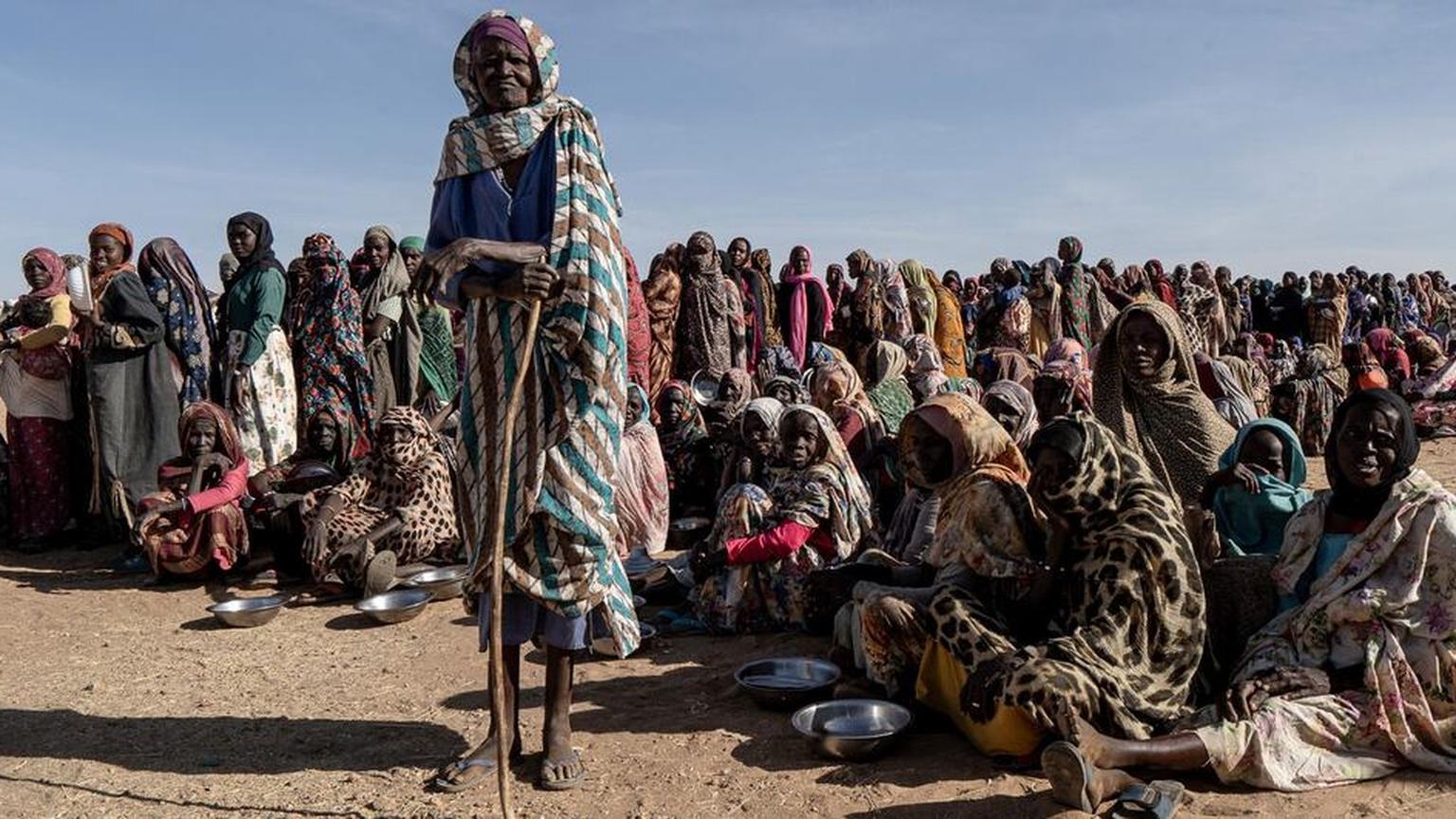
The International Organization for Migration estimated that 119,782 people, representing 23,598 households, were displaced from locations across Blue Nile state between 11 January and 15 October 2026.
Yale's November satellite assessment separately identified more than 800 additional temporary shelters at a displacement site near Ed Damazin over approximately a month. These figures measure different things and cannot be added together.
Drone warfare has become a major cause of civilian deaths across Sudan. At a UN briefing on 17 November, the Human Rights Office said more than 2,230 civilian deaths had been verified nationwide between January and the end of October, including more than 1,630 caused by drone strikes.
These are nationwide totals, not independently verified figures for attacks launched from Ethiopia.
Civilian displacement and insecurity from renewed fighting in Tigray, Amhara and Oromia add to the consequences of a possible broader confrontation.
What could turn the confrontation into a wider war?
Sudan's Blue Nile front now abuts an Ethiopian region where military-logistics activity has been repeatedly documented. Ethiopia's renewed northern fighting has brought its forces closer to Eritrea, while reported armed movement through Sudanese territory adds another grievance.
A major drone attack convincingly traced to an Ethiopian launch site, sustained clashes between regular forces, or direct Ethiopia–Eritrea fighting could provoke escalation beyond the existing battles.
The public evidence does not establish that Ethiopia and Sudan are already fighting a sustained conventional interstate war. It supports concerns about military assistance, reported armed crossings and reciprocal accusations.
On 16 November, the UN said its envoys were engaging regional governments to prevent further escalation, as Sudan reinforced its Blue Nile front and Ethiopia continued its operations in the north.