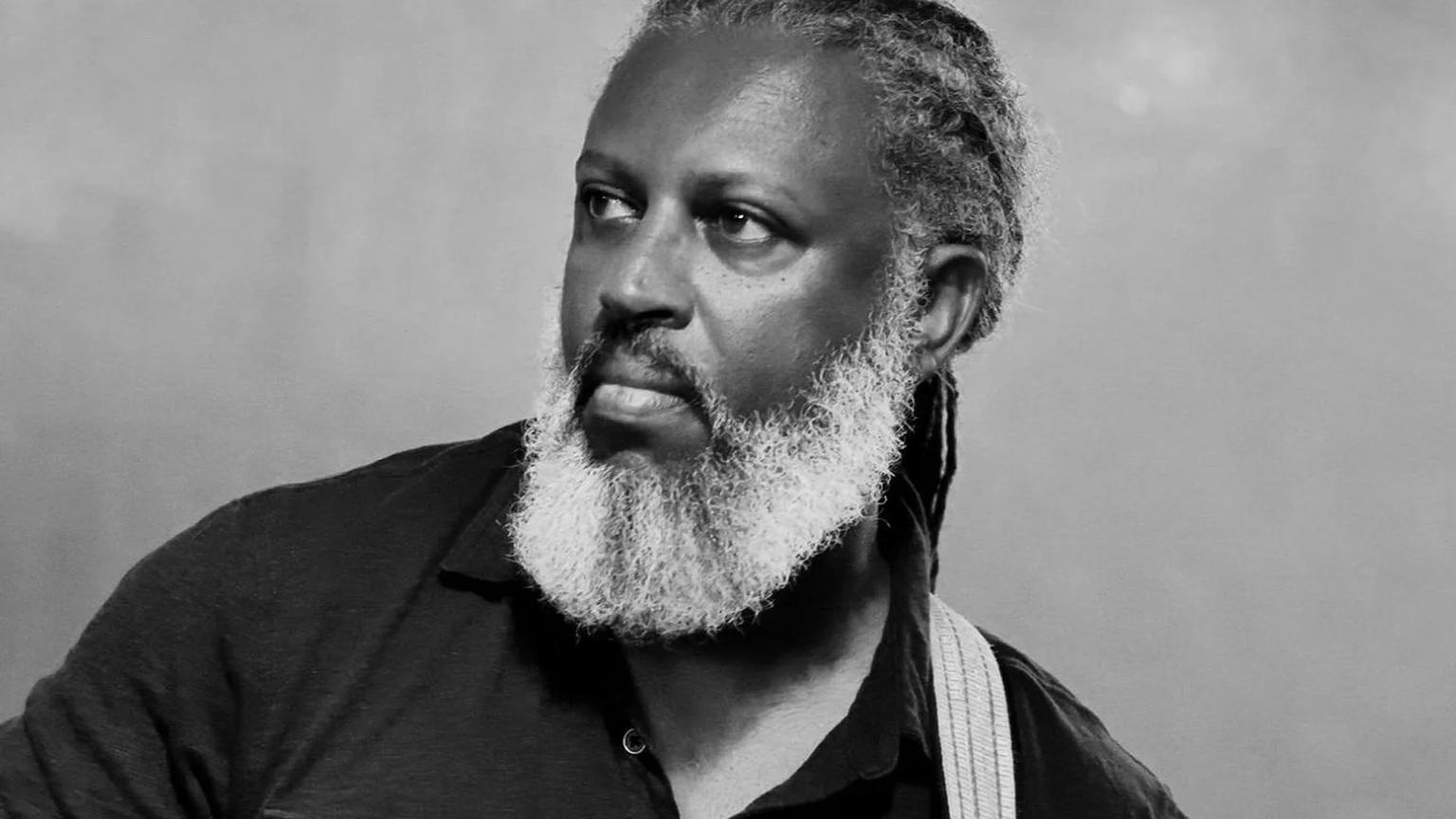
Kirubel Assefa, an Ethiopian bassist, composer and producer based in Los Angeles, released T.A.B.A. on 20 November, an 11-track album named after the four modes that underpin Ethiopian song.
The title takes one letter from each: tizita, ambassel, bati and anchihoye. Each is a qenet, the five-note scale an Ethiopian melody is built on. Tizita, a word that means memory or longing, is the mode behind many of the country's best-loved songs of nostalgia.
Kirubel wrote all 11 compositions and produced the album himself, according to his label, Ethio Jazz Factory. He plays bass and keyboards throughout and guitar on all but one track. The label describes the record as a blend of the sound of 1970s and 1980s Ethiopia with jazz, funk, West African rhythms, Afro-Cuban grooves and reggae. It was mixed by Kris Jackson at Forknspoon Studios and mastered by Raymond Valles at Digital One Studio, both in Los Angeles, and is out on vinyl and digital download.
Advertisement
The players around him include the guitarist Thomas Temesgen, credited as Tommy T., on one track, and the saxophonists Randle Fisher and Nolawi Kebede. Track titles include "Yetizetaye", "Konjo Loga", "Addis 1887", "Bonga" and "Enjemer Chewata".
The release issued with the album describes his guiding principle as "modernizing Ethiopian music without Westernizing its identity".
"I don't approach Ethiopian music from the outside," he said. "It is the musical language I grew up with." The four modes, he said, were not sounds he had discovered later in life but part of who he is as a musician. "What I learned was not to preserve this music like something in a museum, but to know it deeply enough to move it forward."
A language learned in Addis Ababa
That language reached him first through percussion. Kirubel Assefa Kebede was born and raised in Addis Ababa, and his label's biography says his love of music began when he used kitchen utensils as drumsticks. He went on to play drums in the school band at St Joseph School in the capital.
He later moved to the United States to develop his music. While at college he played in reggae, Cuban, funk and world-music bands, and in California he took up the bass, playing with local groups in the Bay Area and Los Angeles while working odd jobs to make a living, the biography says. He studied at the Musicians Institute in Los Angeles.
Over more than four decades he has worked as a bassist, musical director and arranger for some of the best-known singers in Ethiopian music, including Tilahun Gessesse, Mahmoud Ahmed and Aster Aweke, according to his label. He has also played with Gigi, Tewodros Tadesse and the Nigerian reggae singer Majek Fashek.
Lasta Sound and Dimtsepia
In Los Angeles he co-founded Lasta Sound, a band that fused traditional Ethiopian arrangements with Western beats. Kirubel wrote and arranged most of its music and played bass, with Tsegaye B. Selassie as frontman and Teferi Assefa on drums. The band members played versions of themselves in Journey to Lasta, a feature film by the director Wondwossen D. Dikran about musicians struggling to make a living in Los Angeles, which was screened at the Pan-African Film and Arts Festival in February 2005.
His first solo project, Dimtsepia, joined dimtse, the Amharic word for sound, with Ethiopia. It featured the singers Fitsum Mahedere and Tsedenia Gebremarkos, and a horn section of Kamasi Washington on saxophone, Ryan Porter on trombone and Chris Gray on trumpet, the label says.
Ethio Jazz Factory also credits Kirubel with music for the IMAX documentary Mystery of the Nile and with sound design for commercial projects.
The release statement describes T.A.B.A. as a continuation rather than a revival, at a time when the generation that built Ethio-jazz is leaving the stage. Tilahun Gessesse, with whom Kirubel worked, died in 2009.
"I can bring in jazz, funk, African and Latin rhythms and still know where home is," Kirubel said. "The foundation remains Ethiopian."