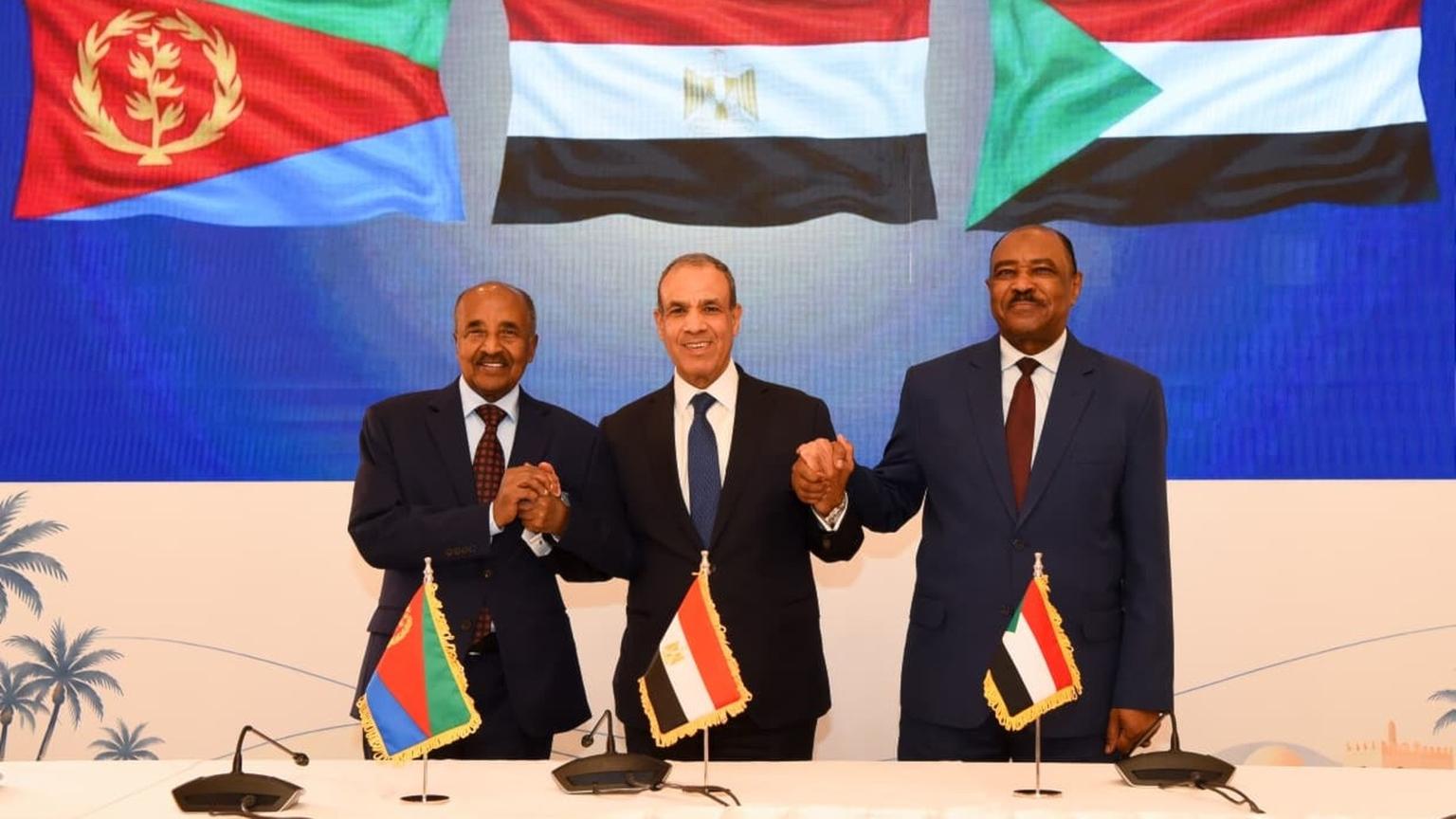
The foreign ministers of Egypt, Sudan and Eritrea said on 21 November 2026 that governing and securing the Red Sea is the responsibility of the states on its shores, and rejected unilateral steps on security or on water.
Egypt's Badr Abdelatty, Sudan's Mohieddin Salem and Eritrea's Osman Saleh met in Aswan, in southern Egypt, on the sidelines of the sixth Aswan Forum for Sustainable Peace and Development, according to a statement from the Egyptian foreign ministry. The ministry's spokesman, Nader Zaki, said they called for the Red Sea to be kept secure and stable and for freedom of navigation through its shipping lanes. The statement did not name any country.
The ministers called for respect for Sudan's sovereignty, unity and territorial integrity and for the preservation of its national institutions, and rejected the role of armed militias and their arming from abroad. They backed Somalia's unity and rejected any parallel entities, and affirmed their support for Eritrea's sovereignty and territorial integrity. They said their consultations were aimed mainly at upholding non-interference in other states' internal affairs.
Advertisement
The three agreed to build on the summit held in El Alamein in October, which also brought in Somalia. Somalia did not take part in the Aswan meeting, and Abdelatty said he would brief the Somali side on the talks. Earlier the same day, he told a forum round table on the Red Sea and the Horn of Africa that its militarisation and a growing foreign military presence were raising tension and threatening shipping, the ministry said.
Both issues bear directly on Ethiopia. The country is landlocked, and its leaders, including Prime Minister Abiy Ahmed, have repeatedly called its lack of access to the sea unjust. Egypt has long argued that the Grand Ethiopian Renaissance Dam (GERD) threatens its water security. On 2 November, Egypt and Sudan called the dam a persistent threat and urged Ethiopia to drop what they called its unilateral policy on the Nile.
The Aswan meeting came amid sharp tension between Ethiopia and Eritrea. In remarks reported on 14 November, Ethiopia's army chief, Field Marshal Birhanu Jula, accused Eritrea of leading the latest offensive against federal forces with Egyptian support. Egypt and Eritrea have rejected Ethiopian accusations that they back armed groups inside the country, and Eritrea has complained to the United Nations that Ethiopia is preparing to invade it. Eritrea's information minister has also accused Birhanu of laying claim to Eritrean towns in a speech in Mekelle.