The World Health Organization has validated Eritrea's elimination of trachoma as a public health problem, making it the 11th country in WHO's African Region and the 34th worldwide to reach the milestone, the agency announced on 16 November.
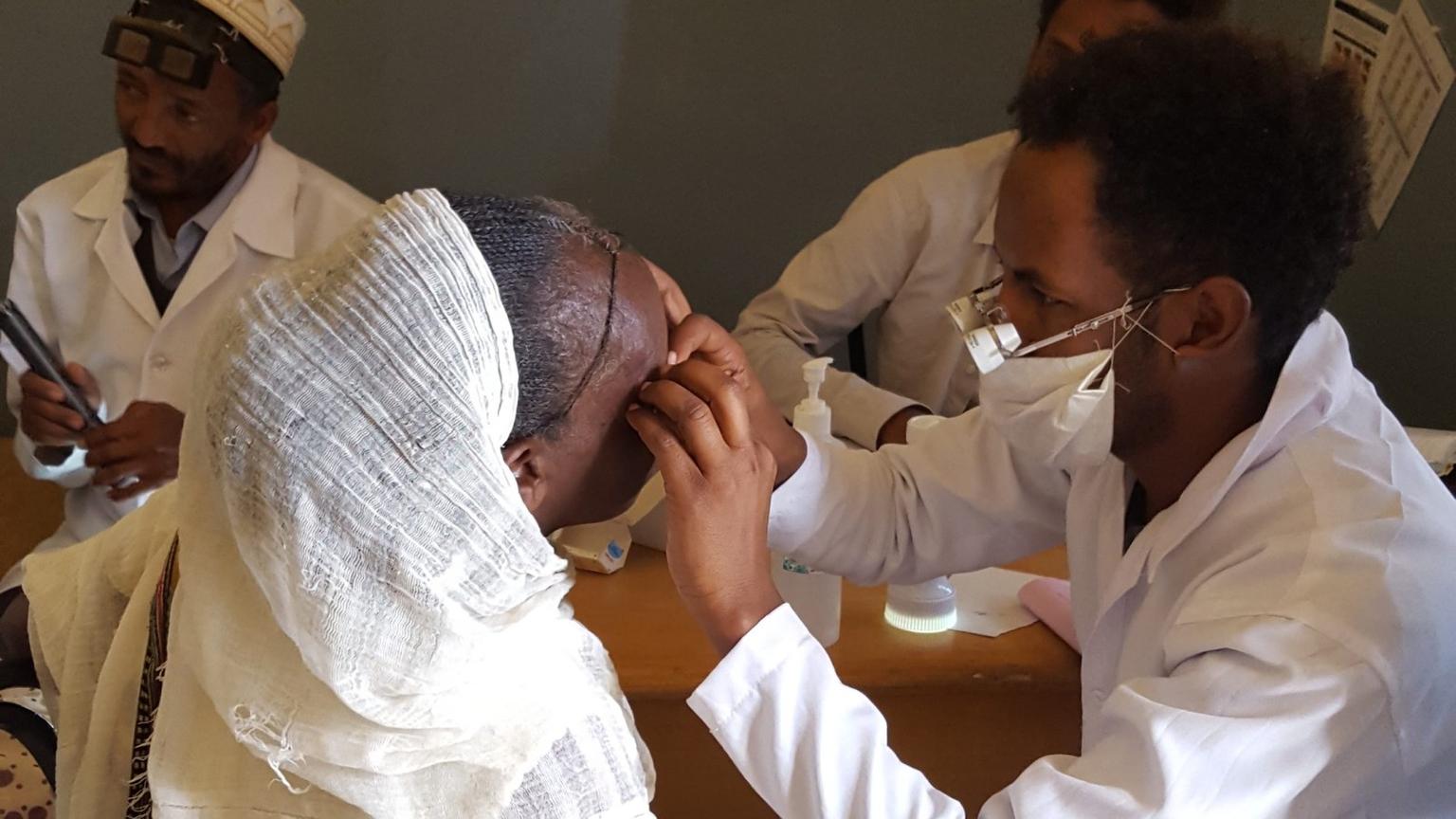
Trachoma, a bacterial eye infection spread through contact with eye and nose discharge, is the world's leading infectious cause of blindness. Repeated infections scar the inner eyelid until the eyelashes turn inward and scrape the eye, a condition known as trichiasis.
Ethiopia carries the world's heaviest burden of the disease. Of the 101.5 million people living in districts that needed mass antibiotic treatment, face-washing and sanitation measures at some point in 2025, 66.9 million, or 66%, were in Ethiopia, according to WHO's latest annual update. The country also accounted for 79,586 of the 98,829 people who received trichiasis surgery worldwide that year.
Advertisement
Eritrea set up its national trachoma programme in 2006 within the health ministry's National Blindness Prevention Programme, according to the International Trachoma Initiative. WHO said baseline surveys were carried out in different parts of the country between 2006 and 2020, and that Eritrea surveyed all 58 of its sub-zobas, its second-level administrative areas, and scaled up its recommended strategy of surgery, antibiotics, facial cleanliness and environmental improvement wherever the disease was endemic.
Between 2009 and 2021 the country received 3,087,120 treatments of the antibiotic azithromycin donated by Pfizer through the International Trachoma Initiative. The initiative said surveys between 2014 and 2022 showed that the rate of active infection among children aged one to nine had fallen below the 5% elimination threshold in all 25 treated districts. It said Eritrea had set up 34 trichiasis surgery centres and trained more than 1,000 case finders, and that by July 2025, 93% of its 2,830 villages had been certified free of open defecation. WHO said the programme's community-led sanitation approach had achieved significant gains with limited external funding.
“After two decades of determined effort, Eritrea has consigned trachoma as a public health problem to history,” said WHO's director-general, Tedros Adhanom Ghebreyesus. Mohamed Janabi, WHO's regional director for Africa, said the achievement sent “a strong message of hope to other African countries working towards trachoma elimination”.
WHO validates elimination only on the recommendation of an independent, WHO-appointed review group that confirms a country has met the agreed thresholds and has systems in place to detect and manage new cases. Eritrea will continue surveillance. It is the 66th country, and the 23rd in WHO's African Region, to have eliminated at least one neglected tropical disease. As of March 2026, 92 million people worldwide still lived in areas where trachoma was endemic.