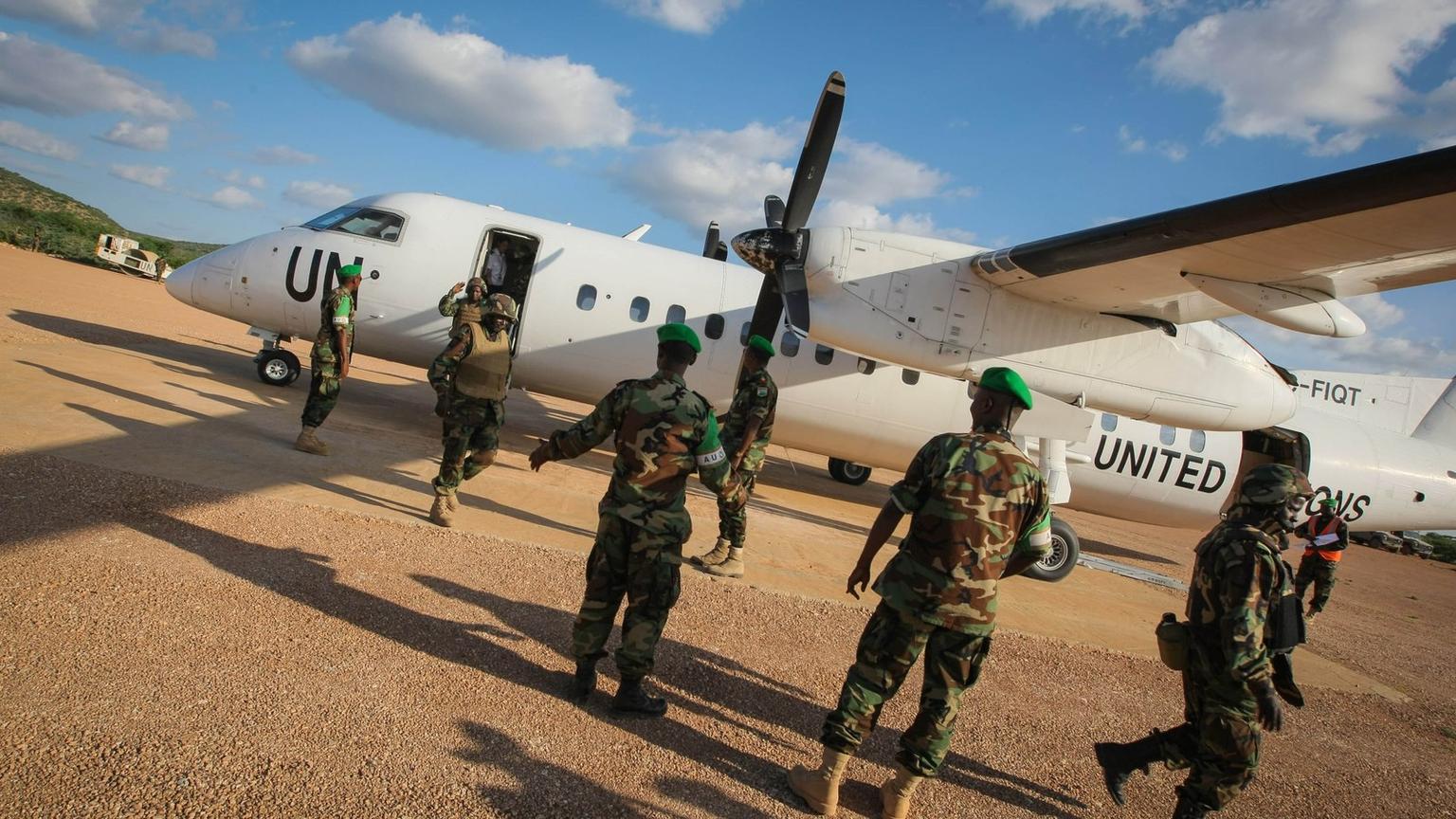
Two Djiboutian peacekeepers were killed and two others wounded on 19 November when African Union troops clashed with Hawadle clan militias. The militias had seized Ugaas Khalif Airport in the central Somali town of Beledweyne to stop a plane carrying federal government troops from landing, according to local reports and a militia spokesman. Ethiopian troops have also served in Somalia for years, including in African Union missions against al-Shabaab.
The brief fighting broke out after fighters from the Macawisley, a militia drawn mainly from the Hawadle clan, moved onto the runway and the area around the airstrip on the edge of town. Djiboutian forces based nearby tried to push them back and clear the way for the aircraft. The plane aborted its landing and returned to its point of departure. At least five Macawisley fighters were injured.
"We will never again allow a plane carrying federal troops to land at the airstrip," Mumin Mohamed Halane, who identified himself as a Macawisley spokesman, told The Somali Stream.
Advertisement
The clash followed weeks of rising tension in Beledweyne, the capital of the Hiran region in Somalia's Hirshabelle state. Hawadle militias have been mobilising in large numbers, joined by hundreds of soldiers and security personnel who left their posts in the national army and other agencies. They responded to a call from the clan leader, Ugaas Yusuf Ugas Hassan, to report to his residence. By 10 November, waves of Hawadle soldiers had abandoned frontline positions and returned to the town.
Ugaas Yusuf presented the mobilisation as a defence of Beledweyne against what he described as an impending offensive by rival clans acting in the name of the federal government.
On the Sunday before the clash, tens of thousands of protesters filled the streets of Beledweyne in opposition to both the federal government in Mogadishu and the Hirshabelle administration. As of 19 November, federal efforts to ease the standoff had not persuaded clan leaders.
The Macawisley previously fought alongside government forces against al-Shabaab, but have grown increasingly hostile to federal and regional authorities in disputes over leadership and power-sharing. Control of the airport, and with it the ability to fly troops into Beledweyne, has become a central point in the dispute.