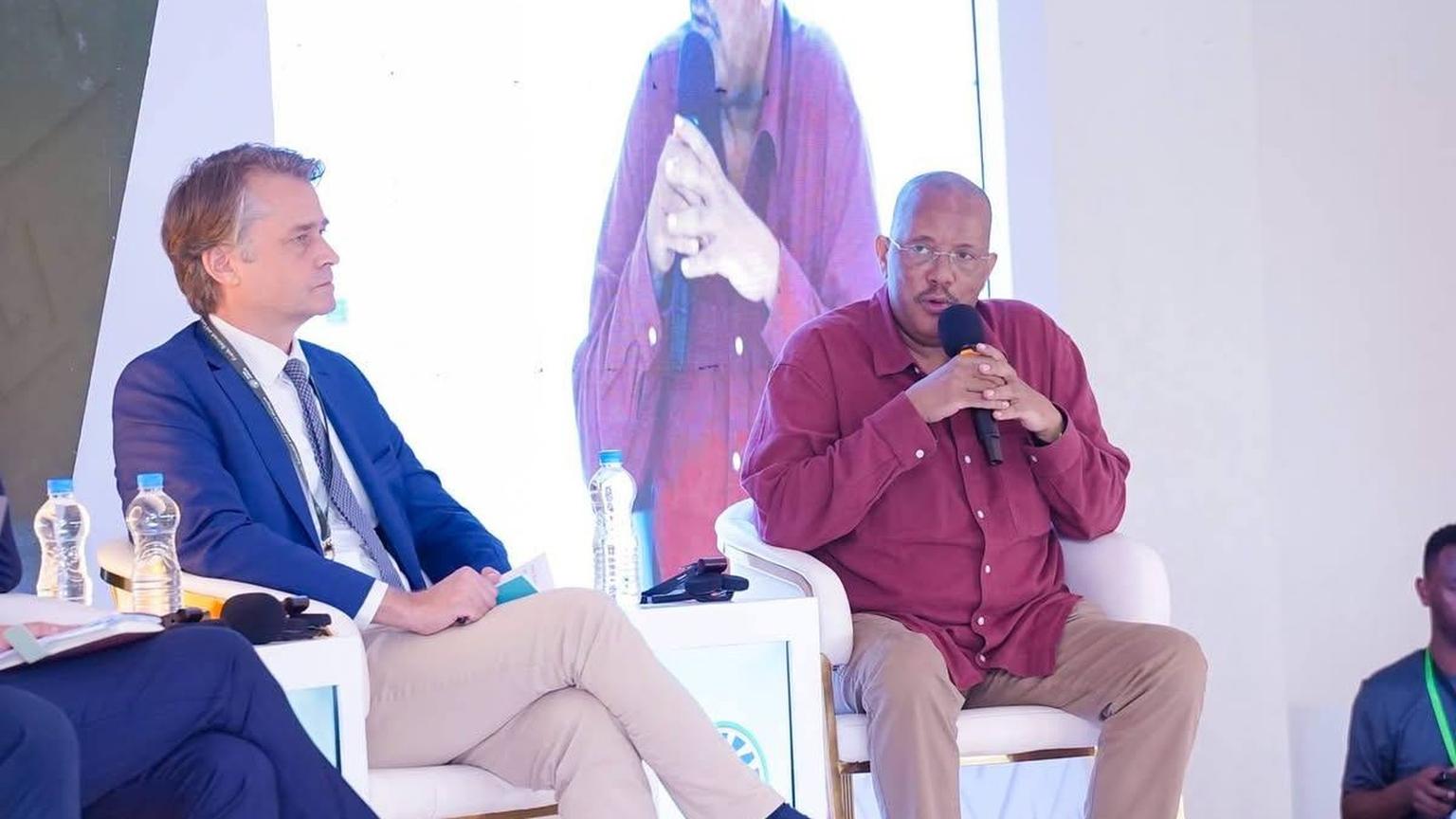
Getachew Reda, the prime minister's adviser on East African affairs, has dismissed reports that forces of the Oromia and Somali regions are fighting each other with heavy weapons in Moyale, the first public comment on the violence in the southern border town from a senior federal official.
In a television interview reported on 16 November, Getachew said that, whatever the noise on social media, he knew the Somali and Oromia regional administrations were working closely together. He described reports that the two regions' forces had confronted each other with heavy weapons as wishful thinking on the part of some, but said he could not rule out the situation growing into such a confrontation if it was not handled properly.
He said problems of this kind should not be hidden and that what had happened should be officially confirmed and made public. The US ambassador, he said, had repeatedly raised gaps in officially confirming incidents and in sharing information, though he did not say which incidents. He called for timely investigation and preventive action so that the situation did not slide into chaos and so that those who had been wronged could be compensated.
Advertisement
His account differs from the record compiled by the Armed Conflict Location and Event Data project (ACLED). The conflict monitor says Somali regional police clashed with Oromia regional police and ethnic Oromo militias at several locations in Moyale town on 22 October, four days after a Somali regional flag was raised in a disputed locality and a 13-year-old Oromo girl was killed. It recorded clashes between Oromo and Somali militias the same day in the neighbouring Arero and Wachile woredas. In October a hospital official in the town said most of the wounded had been hurt by heavy weapons.
A security official familiar with the situation was quoted on 17 November as saying that clashes were continuing and that attempts to broker an agreement between representatives of the two regional administrations had failed. A Kenyan government-led assessment presented on 12 November estimated that more than 50,000 people had crossed from Ethiopia into Marsabit County.
In the same interview Getachew said some actors were trying to exploit violence in Arsi, Wollega and Moyale for their own ends, and that there were signs of a wish to widen communal conflict by targeting civilians because of their faith. He said the alliance between the Tigray People's Liberation Front (TPLF) and other armed groups had collapsed because of its internal contradictions.
He also said Eritrea's government was likely to collapse because of its own contradictory plans and internal weakness, without Ethiopian tanks needing to reach Asmara. Eritrea's information minister last month dismissed earlier accusations by Getachew as falsehoods.


