The National Bank of Ethiopia's purchases of domestic gold injected an estimated 350 billion birr into the banking system in the 2025/26 fiscal year, according to a report First Addis Investment Bank published on 23 November 2026. The investment bank identified that money as a major factor in government borrowing costs falling far below the central bank's 16% benchmark rate.
Average Treasury bill yields fell to 6.53% between July and October 2026, from 15.63% in the same months a year earlier. On 28 October the annualised yield on 28-day bills dropped to 1.31%, while annual inflation that month was 14.6%.
The central bank is paying to remove surplus cash. It accepted 689 billion birr in two-week deposits from banks across three auctions between 15 October and 26 November. A Birr Metrics analysis of the auction results put the resulting interest obligations at an estimated 3.94 billion birr.
Advertisement
Why the cash sits at one bank
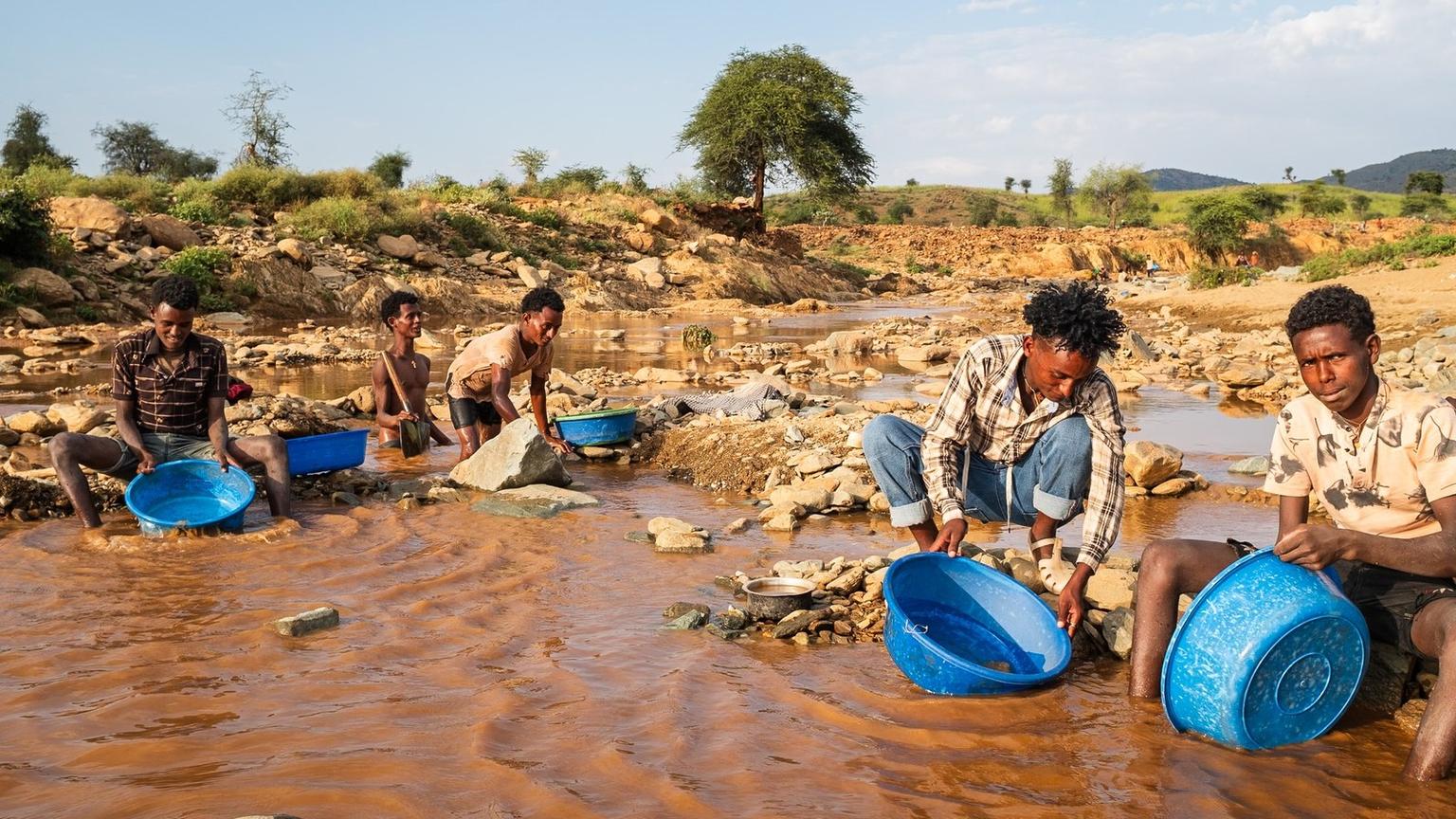
The NBE buys locally mined gold to build foreign exchange reserves. To draw suppliers into formal channels, it has offered premiums of five to 15% above international prices. The reserves grow, but the birr paid to sellers adds to domestic liquidity.
In its fifth review of Ethiopia's reform programme, the International Monetary Fund named the state-owned Commercial Bank of Ethiopia (CBE) as the main recipient of gold-related liquidity, citing its wide presence in gold-producing regions.
First Addis suggested that the central bank's foreign exchange auctions may have drained cash from a wide group of commercial banks without sufficiently reducing the surpluses held by a smaller number of lenders. The investment bank cautioned that this explanation could not yet be established from bank-level transaction data. CBE's share of Treasury bill purchases and of the central bank's deposit auctions has not been disclosed.
The NBE's own Monetary Policy Committee, at its eighth meeting on 3 November, named gold purchases as a major contributor to the growth of base money and said Treasury bill and interbank rates had been below inflation since May 2026. Its press release said reserve money grew 87.2% year on year in the first quarter of 2026/27. The committee still held the policy rate at 16%.
Asked by Ethiopian Business Review why the rate was not raised, Governor Eyob Tekalign said liquidity was concentrated in certain banks and that gold-related money had not been generally injected into the wider economy. "Under the current circumstances, inflation is not linked to money expansion," he said.
Demand doubles, sales barely move
Investors bid 762.4 billion birr for Treasury bills between July and October 2026, up from 381.7 billion birr in the same period a year earlier. The amount sold rose only 3.4% to 261.7 billion birr.
Yields have recovered from their October lows. At the auction on 25 November, investors bid 36.37 billion birr for an initial offering of 15.51 billion birr. The government accepted 16.86 billion birr at a weighted average yield of 6.37%. The 28-day yield rose to 10.51%, while 91-day bills returned 2.27%.
The cost of soaking up cash
On 15 October the central bank accepted 202 billion birr at a uniform-rate auction priced at 12.252%, generating an estimated 949 million birr in interest over two weeks. It then switched to fixed-rate, full-allotment auctions at 16%.
On 29 October six banks placed 317 billion birr, with estimated interest of 1.95 billion birr over 14 days. On 12 November five banks placed 170 billion birr, adding an estimated 1.04 billion birr. Those deposits matured on 26 November.
The estimates use simple interest on a 365-day year. The 689 billion birr total may count funds that banks rolled over when earlier deposits matured. The NBE does not name the participating banks or how much each received.
Participation has narrowed as volumes have grown. The first such operation, in July 2024, drew 19.97 billion birr from 16 institutions at 15%.
The uneven spread of cash also limits other tools. The central bank raised banks' reserve requirement from seven to 10% in December 2025, but the IMF said the concentration of liquidity restricts further industry-wide increases. Authorities are pushing for greater participation in the interbank market and the foreign exchange market, and for more investment in government securities.
The Ministry of Finance told CBE in June 2026 that its maturing low-interest legacy Treasury bills would be replaced with securities at market rates from this fiscal year, with mandatory rollovers due to end by the close of 2026/27. Under the IMF-supported programme, the central bank is expected to develop a long-term strategy for withdrawing from direct buying in the domestic gold market by the end of December 2026.