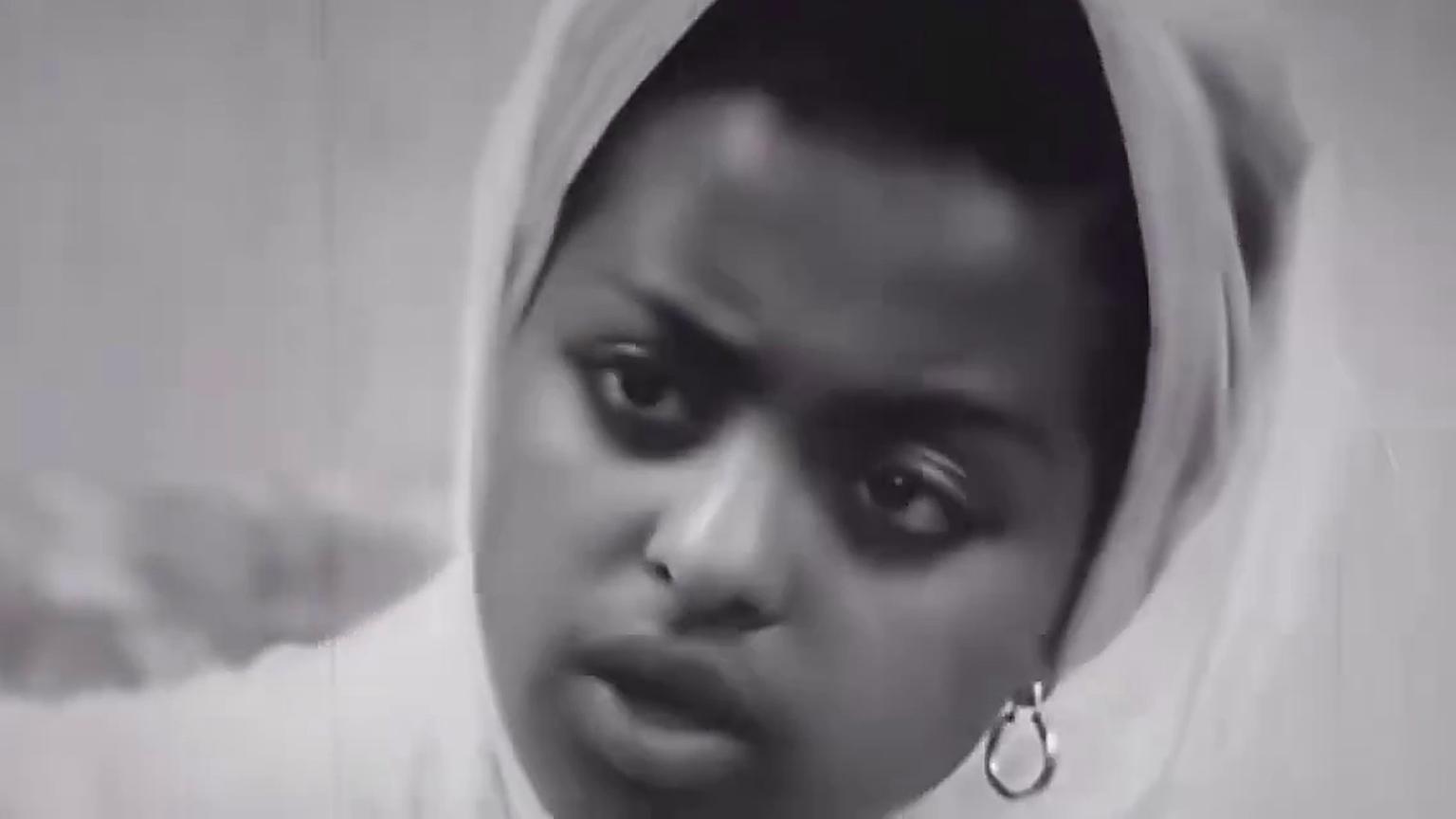
Hirut Abatwa Manew? (ሂሩት አባቷ ማን ነው?, Hirut, Who Is Her Father?), a pioneering Ethiopian film from 1965, screened again in Addis Ababa on 5 March 2026.
The black-and-white Amharic drama, written and produced by Ilala Ibsa and directed by Lambros Jokaris, was presented by Habeshaview at Addis House of Culture inside the National Palace. Film researchers identify it as Ethiopia's first black-and-white feature film.
The screening followed an earlier revival: a retrospective in Addis Ababa in 2019, showings of a digitised copy in 2022 and a London presentation later that year. Six decades after its original release, audiences were again watching a story about a single mother confronting stigma.
Advertisement
The story of Hirut, and the actors behind it
Abebech Ejigu plays Hirut, who falls in love with Gugsa, a musician played by Alemayehu Assefa. They have a daughter, Abeba, but are separated. Hirut searches for Gugsa while supporting their child, travelling from Nazareth to Addis Ababa and Asmara.
Abeba is repeatedly asked who her father is. Hirut faces social contempt as a single mother, but her story does not end with that rejection. Film researchers Eyerusaleam Kassahun and Steven W. Thomas have drawn attention to her attempts to change her circumstances through education.
The romance on screen had a real-life counterpart. In his 2022 book Popular Ethiopian Cinema: Love and Other Genres, film historian Michael W. Thomas, a different scholar from Steven W. Thomas, records, drawing on earlier research, that Abebech and Alemayehu were also in a relationship and later married.
The film preserves images of newly constructed buildings in Addis Ababa and streets in 1960s Asmara, details noted by Eyerusaleam and Steven W. Thomas in their account of early Ethiopian films.
How the film returned to audiences
The film's production is dated to 1964, with its premiere following in August 1965 at the Haile Selassie I Theatre, now Ethiopia's National Theatre. Jokaris, its director, was Greek.
In their account of Ethiopia's early cinema, Eyerusaleam and Steven W. Thomas compare Hirut with two later films by Ousmane Sembène: Black Girl (1966) and Mandabi (1968). They use the chronology to ask how the history of African cinema should be told.
In December 2019, Addis Ababa's Cinema Houses Administration Enterprise screened a programme of early Ethiopian films at the Ambassador Theatre. Hirut opened the retrospective. Much of the work shown had been difficult to see for decades.
A digitised copy was screened in Addis Ababa in January 2022. That October, the distributor Habeshaview included Hirut in Ethiopian Film Week at Rich Mix in London. In its announcement, the company said it had worked with Addis Ababa's cinema authorities to bring the film outside Ethiopia for the first time.
Digitisation was not restoration
Making a digital copy allowed more audiences to see the film, but researchers involved in its revival said the underlying material still needed work. In 2022, Eyerusaleam and Steven W. Thomas wrote that a full frame-by-frame digital restoration was still necessary, citing limits of budget and technology.
In 2025, a filmmaker and cinema programmer writing in Filmkrant reported that parts of Hirut were damaged and that a full restoration was still needed.