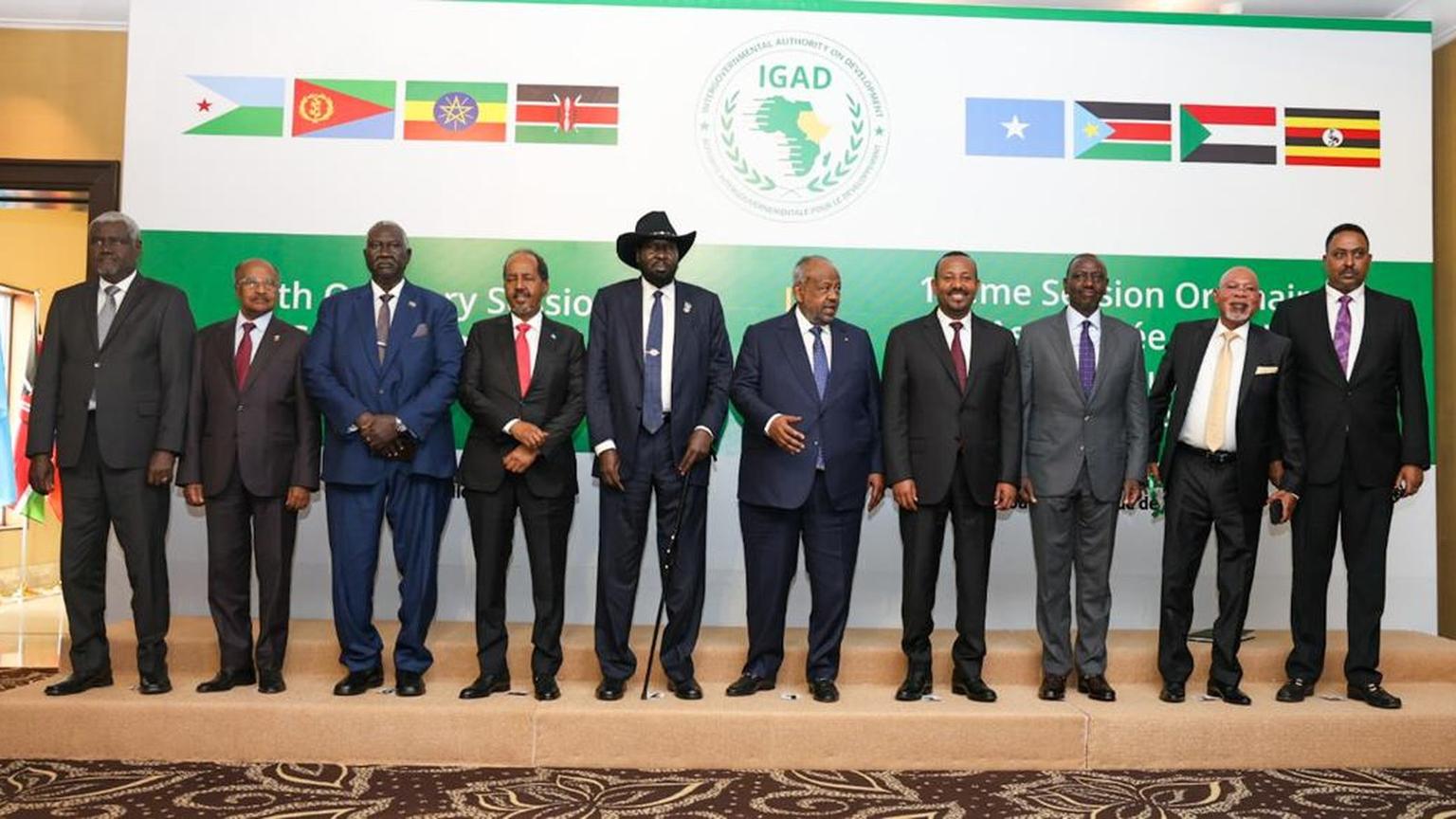
A new founding treaty for the Intergovernmental Authority on Development (IGAD), the Horn of Africa regional bloc, entered into force on 16 November, replacing the 1996 agreement that had governed it for three decades.
The IGAD secretariat announced the change from its headquarters in Djibouti, in the year the organisation marks its 40th anniversary. Heads of state and government adopted the treaty in Djibouti on 12 June 2023. Under its Article 59, it takes effect 60 days after two-thirds of member states deposit their instruments of ratification with the executive secretary.
At an extraordinary session in Djibouti on 15 September, IGAD's Council of Ministers recorded that five members had ratified and deposited: Djibouti, Ethiopia, Kenya, Somalia and South Sudan. Sudan and Uganda had yet to complete the process. Ethiopia's parliament ratified the treaty in April 2024, when IGAD urged other members to follow the example of Djibouti and Ethiopia.
Advertisement
Ethiopia's foreign ministry welcomed the treaty's entry into force in a statement reported on 17 November, calling it a decisive step that showed member states' shared confidence in the organisation and its role in the region. The ministry said the treaty would give the region's countries a stronger legal basis for pursuing peace, stability and prosperity, praised the work of IGAD's executive secretary, Workneh Gebeyehu, and said Ethiopia was committed to implementing it effectively.
"When conflict spills across our borders or drought takes away a family's livelihood, our ability to act together matters," Workneh said in the secretariat's statement. He urged members that had not yet ratified to do so.
The treaty sets out areas of cooperation including trade and investment, the free movement of people, labour, goods, services and capital, transport, energy, food security, peace and security, health and education. It also clarifies the responsibilities of IGAD's organs, provides for more structured dispute resolution and reinforces members' obligations to carry out the treaty. The 1996 agreement no longer has legal force, though existing institutions and decisions continue, subject to alignment with the new text. The secretariat has cautioned that the treaty's objectives require national implementation and are not automatic entitlements from the date it took effect.
IGAD was founded in 1986 to coordinate responses to drought, desertification and food insecurity, and its mandate was widened in 1996 to cover peace, security and development.
The treaty takes effect with tensions running high among members and neighbours. Eritrea withdrew from IGAD in December 2025; the organisation said it had not taken part in meetings or programmes since rejoining in 2023. Relations between Ethiopia and Sudan have deteriorated over mutual accusations of backing armed groups, and the UN says it is working to stop the dispute escalating.