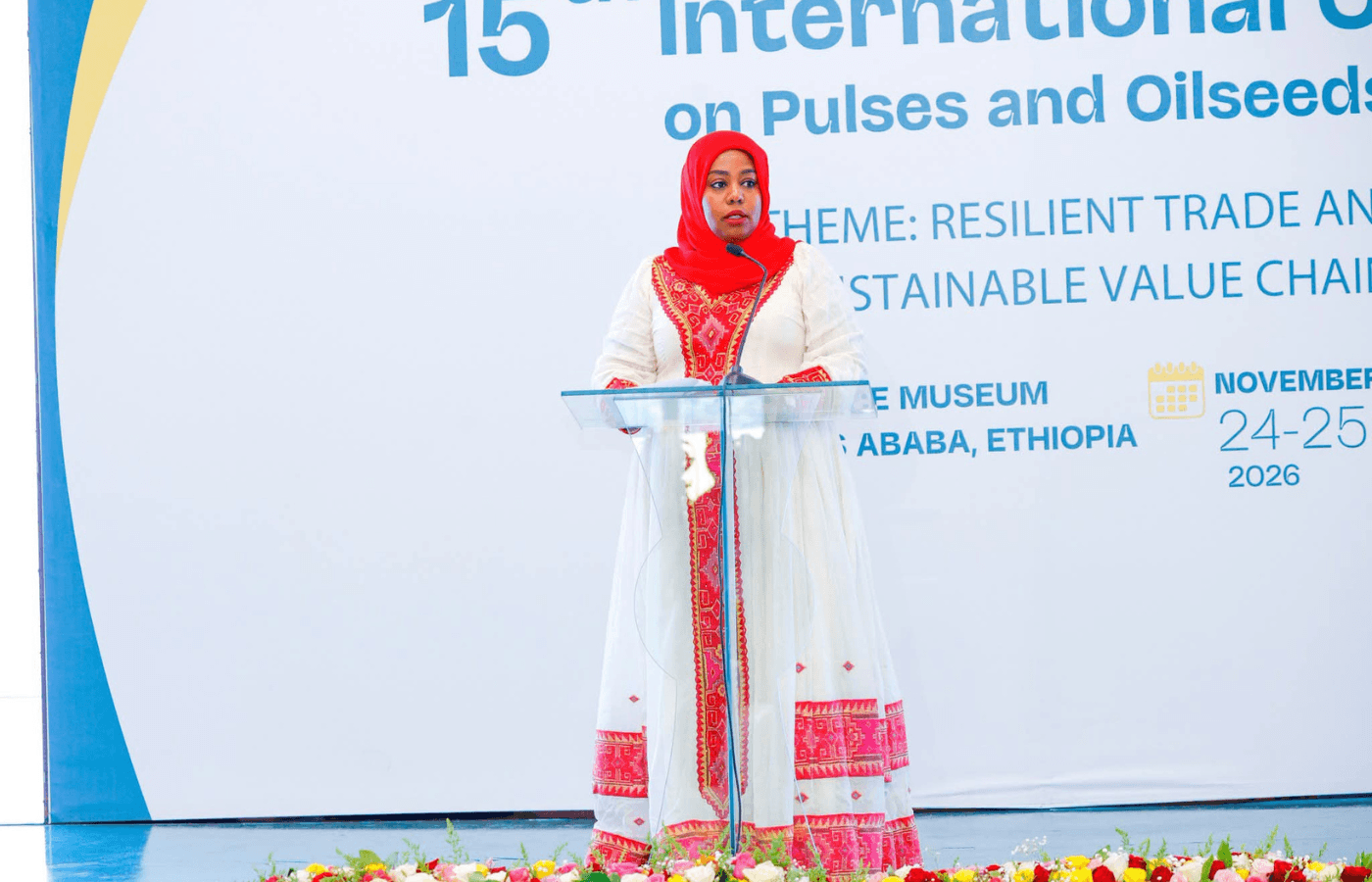
Ethiopia earned $572.9 million from pulses and oilseed exports in the 2025/26 fiscal year, Trade and Regional Integration Minister Yasmin Wuhabrebie said in Addis Ababa on 24 November. That was down from more than $610 million the year before, a fall of about 6%.
The drop came in a year when total export earnings rose 35% to a record $11.2 billion. As a result, the sector's share of national export revenue fell from 7.35% in 2024/25 to 5.1%.
Yasmin gave the figures at the opening of the 15th International Conference on Pulses and Oilseeds (ICOPOS 2026). The two-day meeting runs on 24 and 25 November.
Advertisement
Volumes up, prices down
Ethiopia shipped about 555,000 tonnes of pulses and oilseeds in 2025/26, nearly 5% more than in the previous year. Lower international prices, particularly for sesame, contributed to the fall in earnings. The sector missed the ministry's export target of $743 million by about $170 million.
Earlier figures reported by Capital differ slightly. They put earnings at $571.4 million, down 6.16% from $609 million, and volumes at 554,837 tonnes, up 4.83%. According to those figures, pulses did comparatively well: their volume rose 3.84% and their earnings 4.44%, so the decline fell on oilseeds.
Exporters had raised the price problem a year earlier. In November 2025 they told Capital that local sesame prices were higher than international prices, leaving many export contracts unsigned. They also said the ministry's weekly indicative prices did not follow global benchmarks closely enough.
Gold and coffee drove the rise in total exports. Gold earned about $5.6 billion in 2025/26 and coffee $3.1 billion. Together they accounted for nearly 78% of national export earnings.
Push for processing
The government wants to raise the sector's earnings through more domestic processing, higher farm productivity, stronger quality standards and access to new markets. At the conference Yasmin listed investment opportunities in contract farming, agricultural aggregation, warehousing, edible oil manufacturing, food processing and packaging.
The ministry has also changed how the trade is paid for. It has ordered that all payments for oilseed and pulses exports flow through the Ethiopia Commodity Exchange, a measure aimed at tax evasion and smuggling.
The Ethiopian Pulses and Oilseeds Exporters Association, which represents more than 500 exporters, estimates that Ethiopia uses only about 30% of its potential in the sector. It says post-harvest losses could reach 25% of harvested crops.
At a press conference ahead of the conference, the association's president, Edeo Abdi, said commodities were still being smuggled abroad despite efforts to curb illegal trade. Yasmin said tackling it required coordinated action across government and that the foreign-exchange reforms had reduced some incentives for smuggling, particularly those linked to black-market currency trading. Ethiopia floated the birr in July 2024. Neither gave an estimate of the volume or value of goods leaving through informal channels.
Edeo said exporters needed to get better at anticipating international demand, understanding market trends and building relationships with overseas buyers.
Deals and targets
The conference has brought together more than 600 producers, exporters, buyers, financiers, officials and diplomats from 17 countries. Organisers are targeting commercial agreements worth up to $70 million, compared with $51 million signed at the previous edition.
Yasmin said Ethiopia began trading goods under the African Continental Free Trade Area in October 2025 and that talks to join the World Trade Organisation have reached their final stages. Membership depends on completing the accession process.
The government's national export target for 2026/27 is $13.4 billion, nearly 20% above last year's result. birr Metrics calculated that if that target is met, regaining a 7.35% share would require pulses and oilseeds to earn about $985 million. That is more than $412 million above the 2025/26 figure, an increase of about 72%.


