A factory built for about $4 million has begun producing vitamin and mineral premix in Addis Ababa. It gives Ethiopian flour millers a local source for an ingredient they have mostly imported.
Sanku, a nonprofit social enterprise that specialises in food fortification, developed the plant in the Kilinto Special Economic Zone. Production started in October 2026, and an official inauguration is scheduled for 7 December. In an announcement on 18 November, Sanku said the factory can produce up to 3,000 tonnes of nutrient premix a year.
At full capacity, the organisation said, the plant could make enough premix to fortify flour eaten by as many as 200 million people in Ethiopia and neighbouring markets. That figure describes potential output, not the number of people now receiving fortified food.
Advertisement
The investment covers manufacturing facilities, warehouses and a quality-control laboratory on a 6,900-square-metre site. Once fully operational, the factory is expected to create about 50 direct and 200 indirect jobs.
Paying in birr
Ethiopian flour processors have sourced premix from international suppliers. That has exposed them to foreign-exchange shortages, shipping delays and swings in international prices. Sanku said local production would let millers pay in birr, place smaller orders and receive supplies within days.
The plant still needs vitamins, minerals and other ingredients to make its blends. How far it reduces imports will therefore depend partly on where those inputs come from. Any savings for millers will also depend on prices and on how the factory performs commercially.
Sanku already runs a premix plant in Tanzania, its first dedicated facility, which opened in 2024. The organisation said that operation cut sourcing costs and shortened delivery times from months to weeks.
A compliance gap
Ethiopia approved mandatory fortification standards for wheat flour and edible oil in June 2022 and launched its compulsory National Food Fortification Programme in August 2024. Under the standards, wheat flour is fortified with nutrients including folic acid, zinc and B vitamins, and edible oil with specified vitamins. Salt is also covered.
Compliance has lagged. In January 2026, Ministry of Industry officials reported to Parliament and the National Food and Nutrition Council that 52% of 368 food-processing industries assessed had not implemented the requirements. The standards cover wheat flour, edible oil and salt.
The Ethiopian Millers Association later listed difficulty obtaining premix among the obstacles facing flour processors. It also acknowledged that supplies purchased in local currency had become easier to obtain.
The government has committed to raising the share of wheat-flour processors that fortify their products to 60% by 2030, from a reported baseline of 16.2% in 2024. It is also targeting fortification by 79% of edible-oil manufacturers and 97% of edible-salt processors by the end of the decade. Among the measures it has identified are a favourable environment for premix suppliers, support for manufacturers and stronger regulatory enforcement.
According to national data that Sanku cited when it announced construction in November 2025, about 37% of Ethiopian children under five were stunted. Nearly one-third of women of reproductive age were anaemic.
Supply is one piece
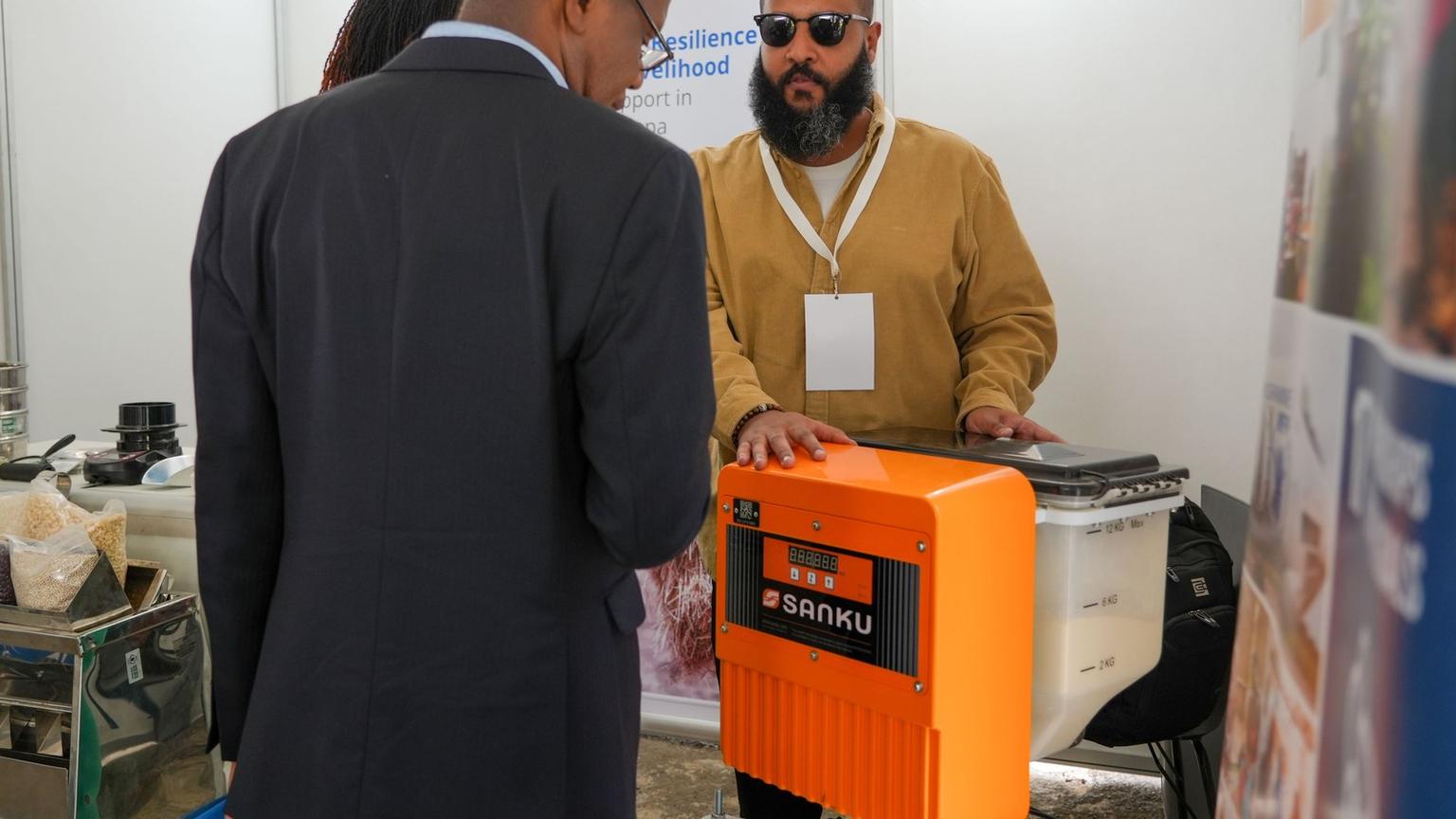
Sanku works with more than 400 partner flour mills in Ethiopia. It estimates that its fortification network reaches 13.4 million people in the country. It supplies premix, dosing equipment, training and quality-assurance services. Its patented Dosifier automatically adds measured quantities of nutrients during milling.
The organisation earns revenue from selling premix and flour packaging. Philanthropic money funds its facilities, equipment and expansion. Sanku said commercial activities covered about one-third of its operating costs in 2026. It estimates that its network across Eastern Africa grew from about 7 million people in 2023 to 87 million in 2026.
Felix Brooks-church, Sanku's co-founder and chief executive, said manufacturing capacity alone would not ensure that fortification requirements lead to better access to fortified food. "Millers need reliable supplies of nutrients, the right equipment, and support to maintain quality," he said.