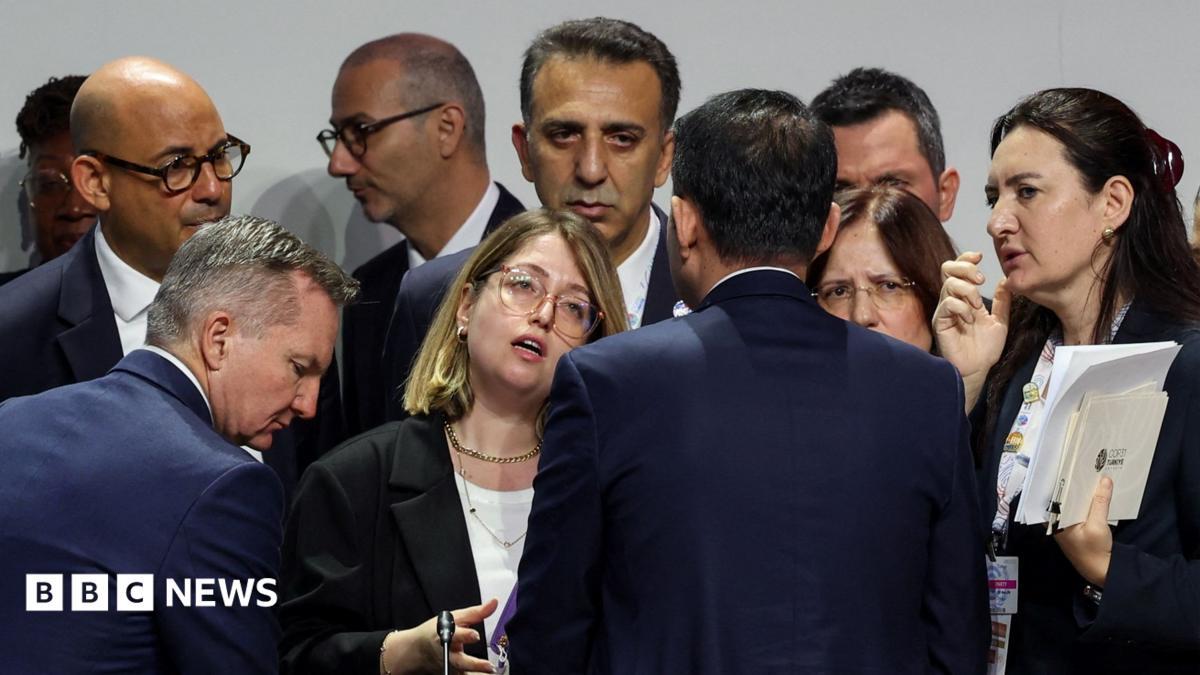
The UN's COP31 climate talks in Antalya, Turkey, ended on Sunday without a main political agreement. Countries split over fossil fuels and over money for poorer nations, after the longest UN climate conference in history.
Negotiations were due to finish on Friday but ran late into Sunday. The last time a COP's main political agreement collapsed in this way was in Copenhagen in 2009. The next conference, COP32, is scheduled for November 2027 in Ethiopia.
Australian Prime Minister Anthony Albanese, whose country co-hosted the talks with Turkey, attributed the failure to "difficult geopolitical times". "That is the reality," he said on Monday.
Advertisement
UN Secretary-General Antonio Guterres, attending his last COP before he steps down, said he was "deeply disappointed". He blamed what he called "powerful fossil fuel interests", which he said were taking "a page from Big Tobacco's playbook: distorting the science, delaying policy, blocking action, and piling up huge profits while people everywhere pay the price".
Fossil fuels dropped from the text
After two weeks of negotiations, delegates were given a new draft deal in the early hours of Sunday. The words "fossil fuels" did not appear anywhere in it. Its only indirect reference to coal, oil and gas was a nod to the COP28 agreement of 2023, when countries agreed to "transition away" from fossil fuels in energy systems. An earlier draft had mentioned "fossil fuel" or "fossil fuels" six times, which oil-producing nations rejected.
The EU, Pacific island nations and others refused the final text. The EU's representative, Irish minister Darragh O'Brien, said the "decisions go nowhere near the level of ambition needed to tackle climate change". "It is unconscionable that we would have a climate pact that makes no mention of fossil fuels," he said. Panama and the Marshall Islands also criticised the deal.
Saudi Arabia's delegate, Mohammad Ayoub, said Arab countries "continued to engage in good faith", arguing that they account for only a small proportion of historical greenhouse gas emissions. Russia warned against turning "to slogans" over coal, oil and gas, saying that moving away from fossil fuels too quickly would lead to "fuel poverty".
Chris Bowen, Australia's climate minister and COP31 president of negotiations, said there were "unbridgeable red lines". He described "the most complicated and fraught geopolitical environment in living memory". Turkey's environment minister, Murat Kurum, who held the COP31 presidency, gavelled the talks to a close.
Finance pledge left without figures
Many poorer countries objected that the text contained no clear financial commitments from richer nations to help them adapt to more intense heatwaves, more severe droughts and other effects of rising temperatures. At COP30 in Brazil, countries agreed to triple finance for adaptation. This year's draft gave no concrete figures and no baseline against which to measure that pledge.
"Rich nations and polluting governments cannot keep arriving empty-handed," said Mohamed Adow of Power Shift Africa, an African climate and energy think tank.
Some agreements were reached. Countries made progress on a "just transition mechanism" to support workers and communities as economies shift towards clean energy. The COP31 president said more than 80 countries backed Turkey's target to raise the share of global energy use met by electricity to 35% by 2035.
The UN's climate chief, Simon Stiell, said he would seek advice on potential reform of the consensus-based process. He told the BBC the consensus process had "worked to get us where we are" and "got us through Paris", but acknowledged it "fell short" on Sunday. Former US vice-president Al Gore said it was "outrageous that a handful of petro-states have veto power over any mention of fossil fuels", and wrote on X that the COP process was "in need of significant reform".