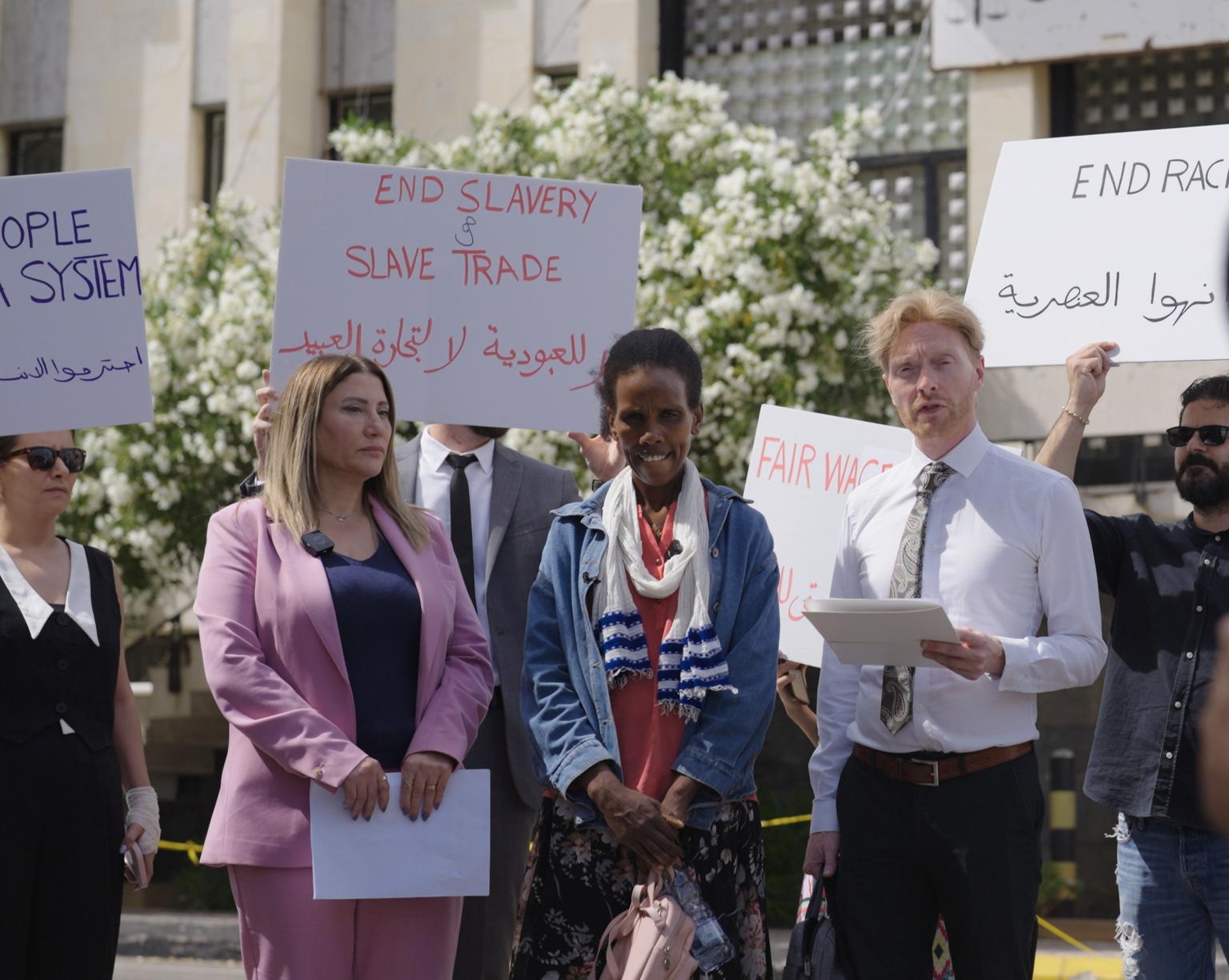
On 27 May 2025, Meseret Hailu returned to Lebanon to face her former employer in court. She had travelled from Ethiopia on a 48-hour visa and, with the help of an interpreter, gave evidence before an investigating judge at the Baabda Palace of Justice.
It was the first time the Ethiopian woman had been able to testify in a criminal complaint filed almost five years earlier. She accused her former employer and a recruitment agency of slavery and slave trading after spending more than eight years working in a Lebanese household.
In November 2025, an investigating judge dismissed the case, despite what Meseret's lawyers say was a public prosecutor's recommendation that the defendants face trial. Meseret's lawyers appealed. The dismissal stopped the prosecution at the investigative stage; it was not a verdict after a full criminal trial.
Advertisement
The years her family could not reach her
Meseret left Ethiopia for Lebanon in early 2011. A broker in Ethiopia and a recruiter in Lebanon helped organise her placement. She was promised $300 a month for domestic work, according to Legal Action Worldwide (LAW), the organisation that later represented her.
At first she called home and sent money, her mother, Emebet Alemu, recalled in an interview years later. After about a year the calls and remittances stopped.
The family did not know what had happened. Her parents visited Ethiopia's foreign ministry seeking help finding her. In a 2019 interview at her home in the Ethiopian town of Dera, Emebet described the disappearance in three words: “She just vanished.”
Meseret and her lawyers allege that her employer took her passport, restricted her movement and cut her off from her family. LAW says she worked from about 6.30am until 10pm without a day off and was paid for only 13 months of approximately eight and a half years of employment. The organisation also alleges physical and verbal abuse and denial of food and medical care.
She was employed by May Saadeh, a Lebanese dentist, who was later named as a defendant in Meseret's complaint alongside a recruitment agency.
According to LAW, apart from cleaning her employer's clinic, Meseret left the apartment only three times. The organisation says doors were locked when her employer left the apartment and when she cleaned the clinic.
How Meseret came home
Her family eventually sought help from the activist organisation This Is Lebanon, which contacted Saadeh in 2019 and warned that it would publicise the case if she did not release Meseret. LAW says a journalist's intervention also helped bring about her release.
Saadeh then arranged for Meseret to leave and return to Ethiopia in September 2019. Saadeh gave her some cash, but Meseret said she was still owed years of unpaid wages. Saadeh did not respond to Al Jazeera's requests for comment when it reported the case in 2021.
Meseret described difficulty sleeping and adapting after returning home. In an interview published in 2021, she said: “I won’t get those eight years back.”
In October 2020, LAW filed a criminal complaint against Saadeh and the recruitment agency. LAW argued that the allegations amounted to offences including slavery, slave trading, human trafficking, forced labour and deprivation of liberty.
The court case that almost never heard her
Saadeh appeared at a preliminary hearing in February 2022, but Meseret was back in Ethiopia.
In July 2024, the investigating judge closed the investigation before Meseret had testified. Her lawyers said requests for a remote appearance or an adjournment had been rejected. A public prosecutor subsequently questioned the closure and recommended hearing her evidence, and the investigation was reopened in March 2025.
Meseret testified in her former employer's presence, assisted by an interpreter from the Ethiopian embassy.
According to LAW, Meseret had left her ill mother and young daughter in Ethiopia to make the journey. In a statement released by the organisation that day, she said: “What I went through still haunts me.”
Meseret said she was testifying not only to tell her own story but to stand up for other migrant workers in Lebanon who had been silenced or abused.
Human Rights Watch said in its World Report 2026 that Lebanon's kafala sponsorship system continued to govern thousands of domestic workers. It also described longstanding allegations of labour abuses, withheld pay and human trafficking in migrant domestic recruitment.
LAW described the complaint as groundbreaking and brought allegations of slavery and slave trading under Lebanon's anti-trafficking framework. Legal analysis by Badil noted that the country's law lacked a standalone definition of slavery. LAW adviser Aaron Kearney said the aims included using the 2011 anti-trafficking law and recognising slavery as a legal concept.
A prosecutor sought a trial. The judge dismissed the case
Following the 2025 testimony, the Mount Lebanon public prosecutor recommended that the former employer and recruitment agent be prosecuted, according to LAW's account of the proceedings.
Instead, the investigating judge dismissed the case in November 2025. LAW said the judge relied on material that prosecutors had questioned because of inconsistencies and indications of coercion.
LAW announced on 12 November 2025 that it had appealed, asking a three-judge panel to overturn the dismissal and refer the case for trial.